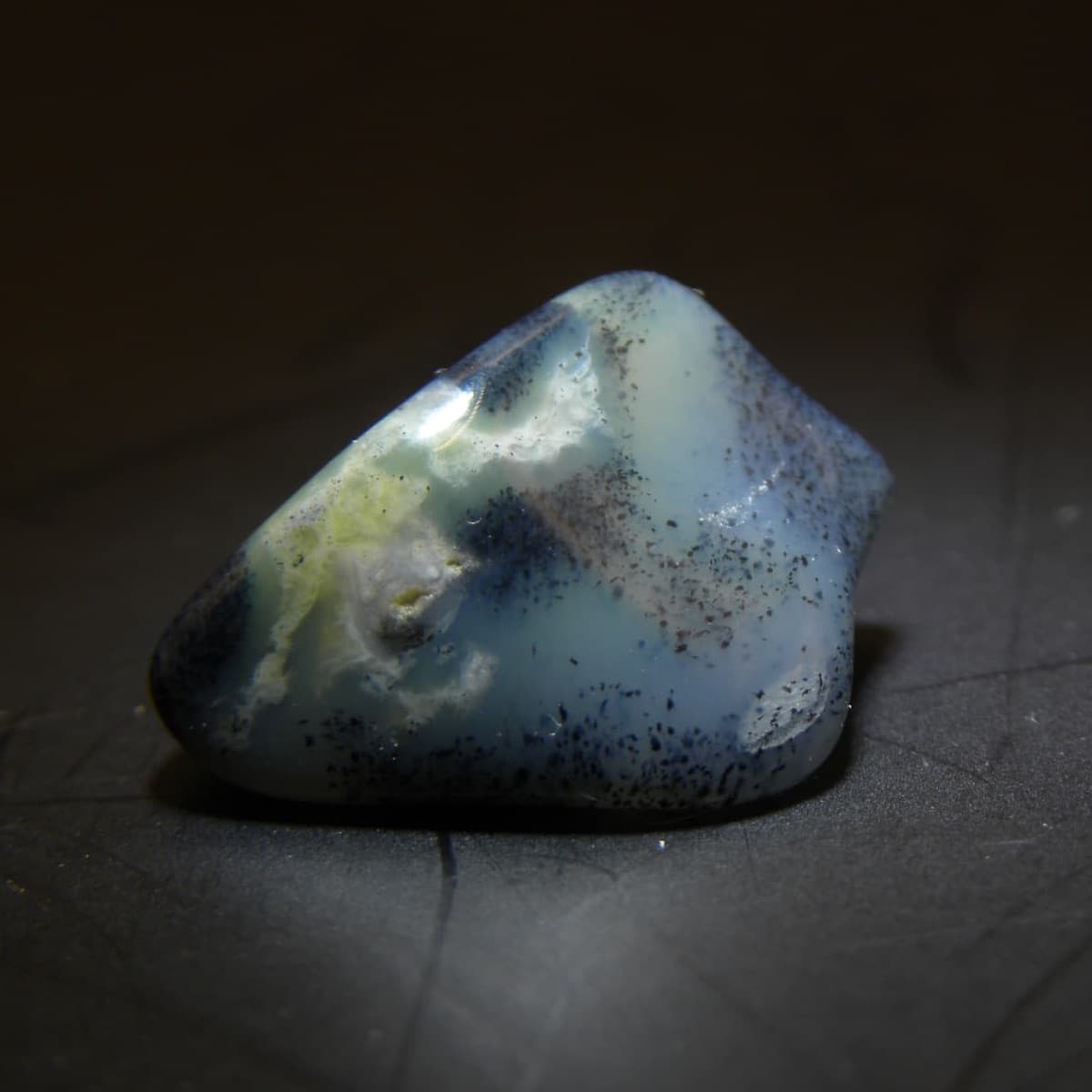
Explore the mesmerizing world of agate — from its varieties to jewelry uses and sources. Uncover the secrets of these stunning gemstones!
5 Minute Read
What you'll learn in this article:
Agate is a remarkable variety of chalcedony, a cryptocrystalline form of quartz that occurs naturally in an incredible range of colors and patterns. Its patterns, translucency, and sometimes moss-like inclusions can distinguish agates from other chalcedonies.
Some notable facts about agate stone include:
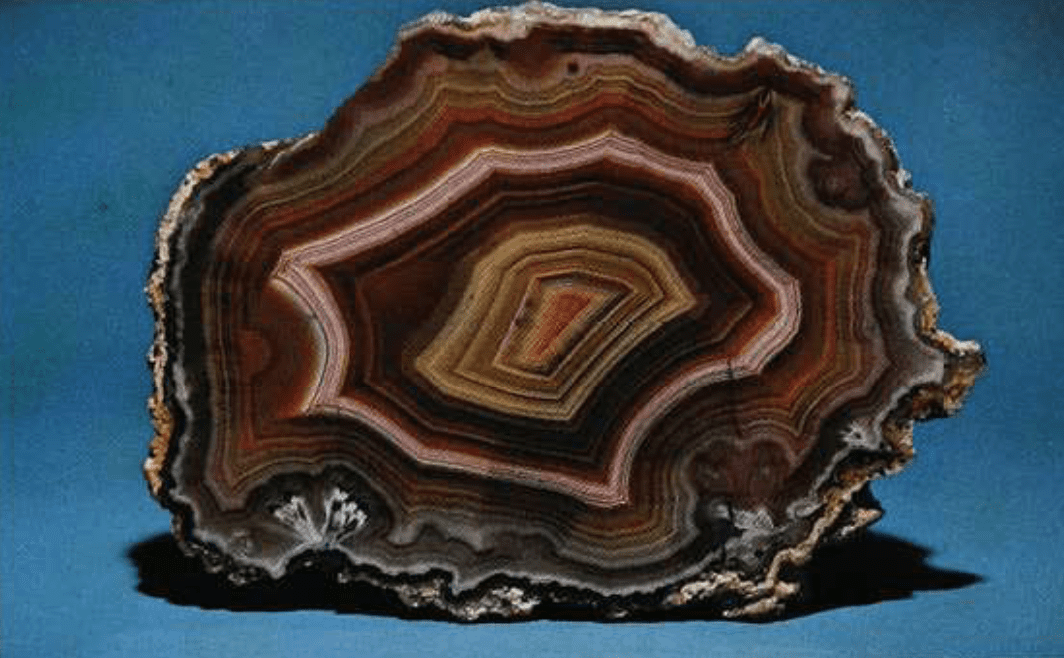
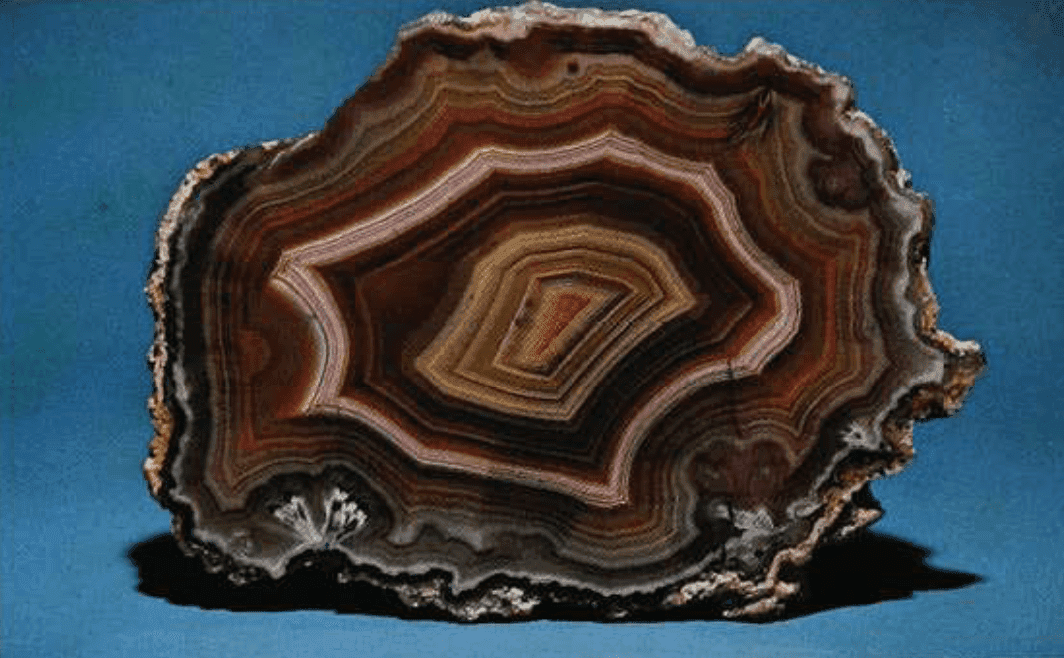
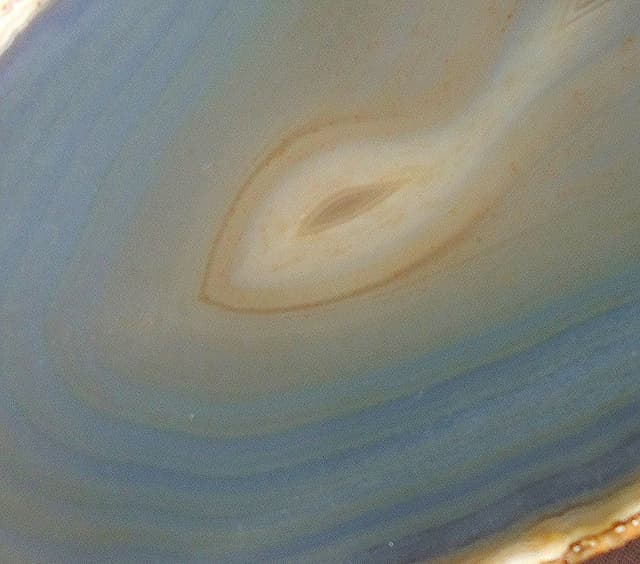
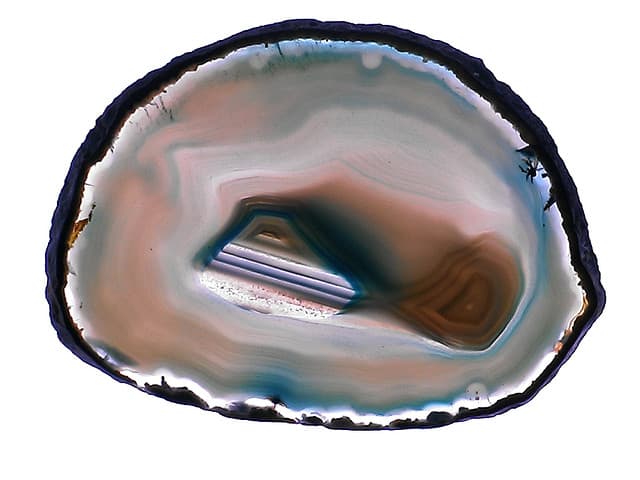
Gemologists usually describe agate varieties by their color patterns, inclusions, or sources. The color patterns in agates usually take the form of flat or concentric layers or bands. Mossy or dendritic ("tree-like") inclusions can sometimes create the impression of vegetation and landscapes.
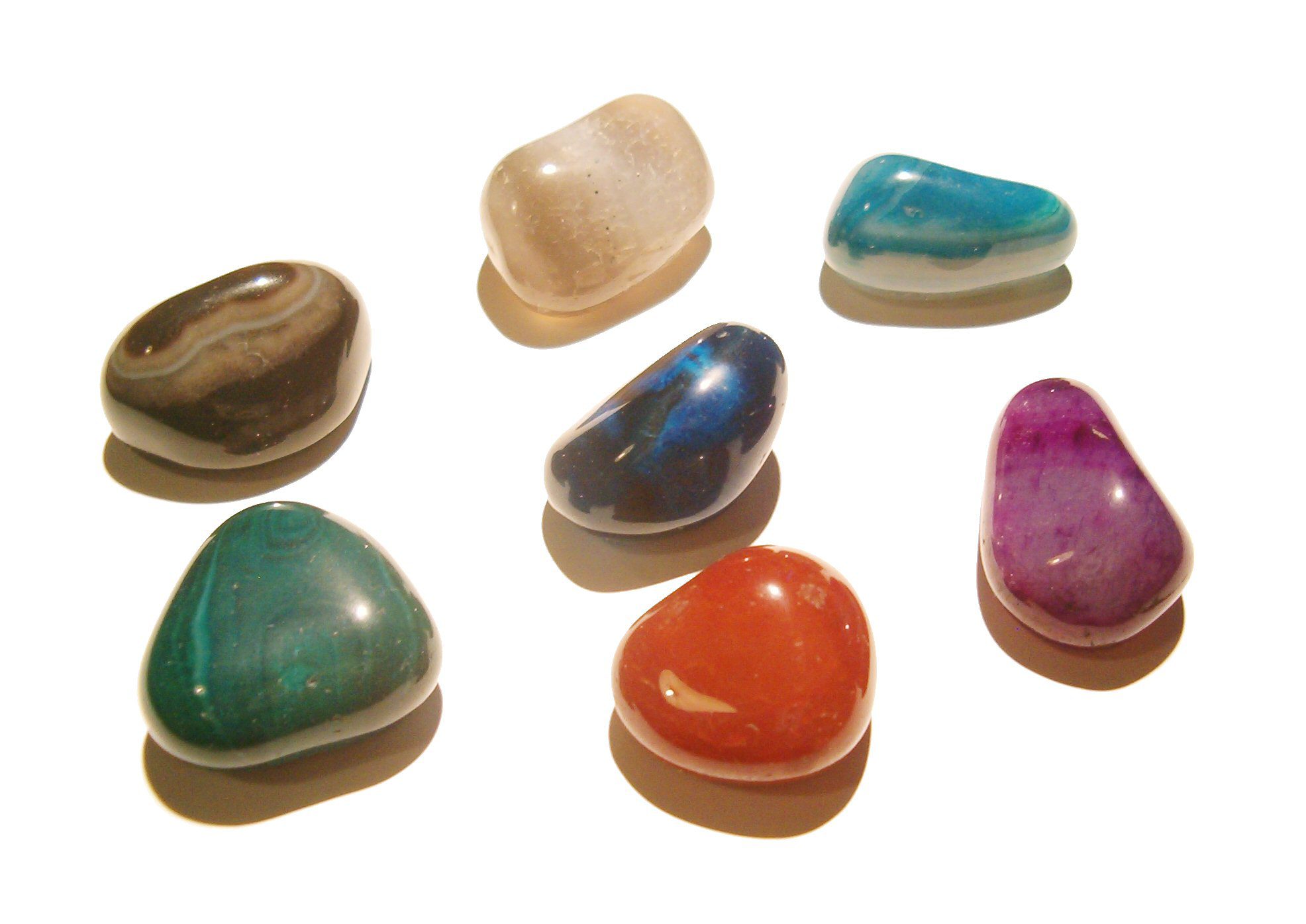
Banded agates feature regular color layers and bright colors, making them incredibly popular. However, keep in mind that many of the richly colored banded agates you find for sale are dyed commercially. Although banded agates occur all over the world, Brazil stands out as one of the most productive sources.
These unique varieties contain intriguing mineral oxide inclusions that can show any color. The appearance of these inclusions determines the variety as follows:
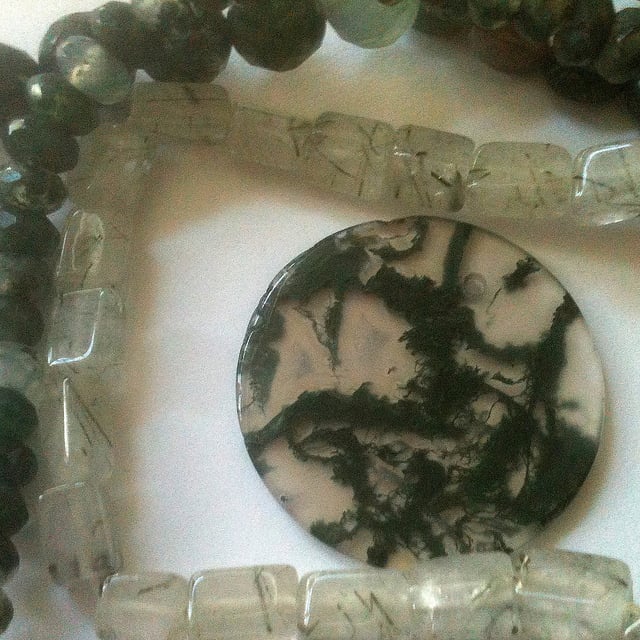
Some remarkable agates have inclusions that can create the appearance of entire landscapes within them, complete with lakes, shorelines, trees, and shrubs. Collectors particularly treasure these "natural picture" stones.
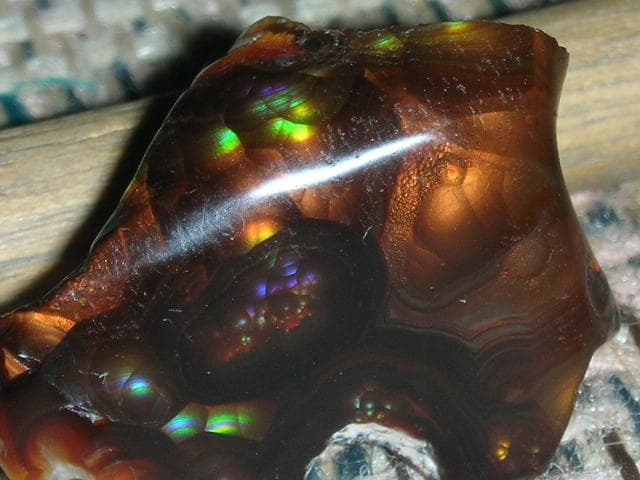
Due to inclusions of plate-like crystals of iron hydroxides called limonite, fire agates exhibit stunning iridescence. Careful cutting and polishing can enhance this effect.
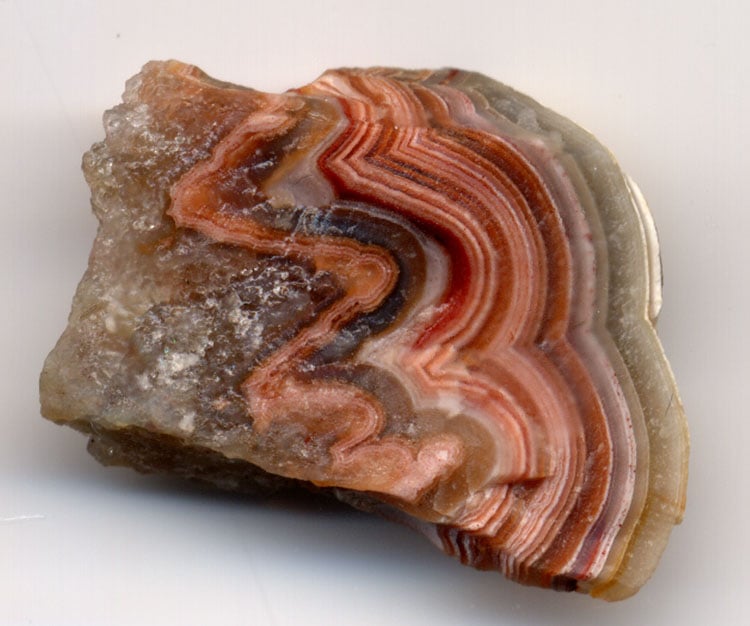
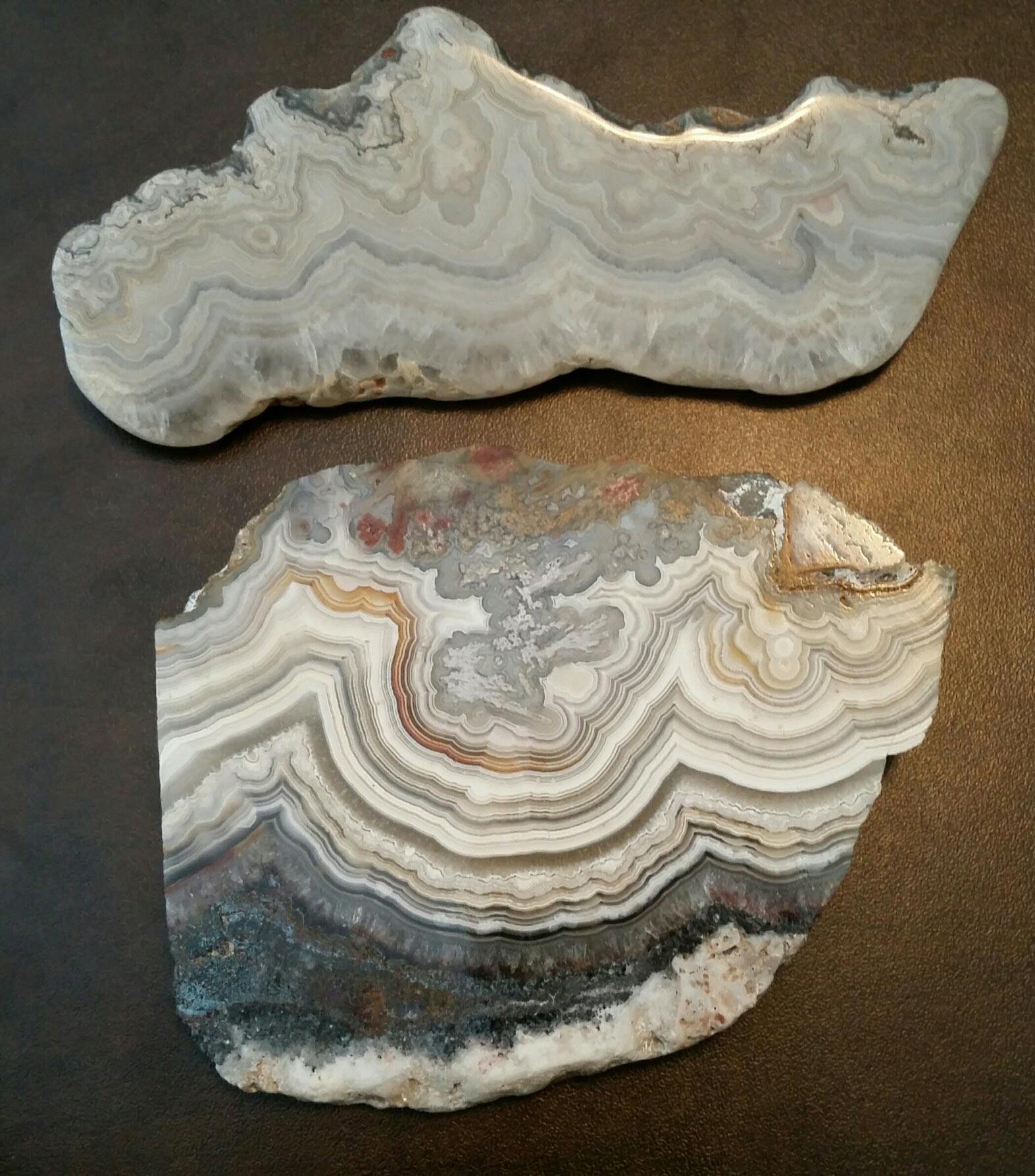
Characterized by delicate designs, lace agates show bands with intricate swirls and loops. Mexico is one of the premier sources of this material.
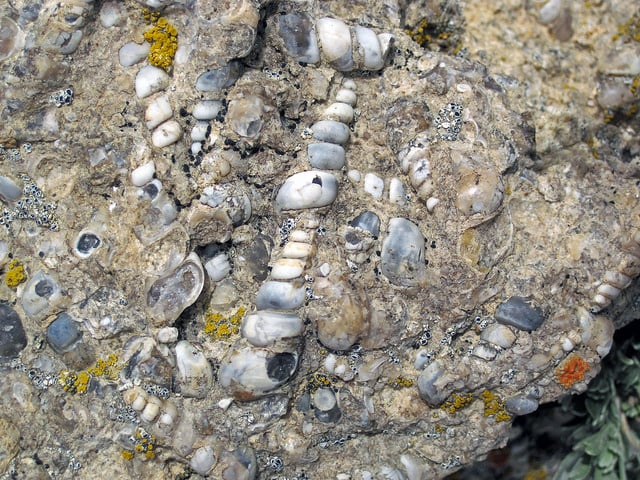
Fossilized ancient tree trunks and limbs may have their organic components replaced by agate stone over millions of years. In some cases, their woody structure may also be preserved and visible with a microscope. The agate's color may be very bright and strong.
The value of agates is generally quite modest. Three main factors determine the prices of these stones:
For more information on agate value, consult our comprehensive guides to buying agates and moss agate engagement rings.
For information on synthetic or lab-made quartz in general, consult our quartz gem listing.
An ancient enhancement technique for agates, dyeing remains a common practice. (Chalcedony stones are relatively porous, which makes dyeing these pieces easy). Dyeing is usually a stable process for agates.
A celebrated and secret process for dyeing agates originated in Idar-Oberstein, Germany, during the 19th century. When the local deposits were depleted, emigrants to South America shipped gray agates back to Idar-Oberstein. The resulting dyed agates proved extraordinary.
Enhancements should be disclosed to consumers to ensure marketplace transparency.
Agate stones come from many locations worldwide:
Agates typically form as nodules but can occasionally develop into masses weighing several pounds and spanning many inches in diameter.
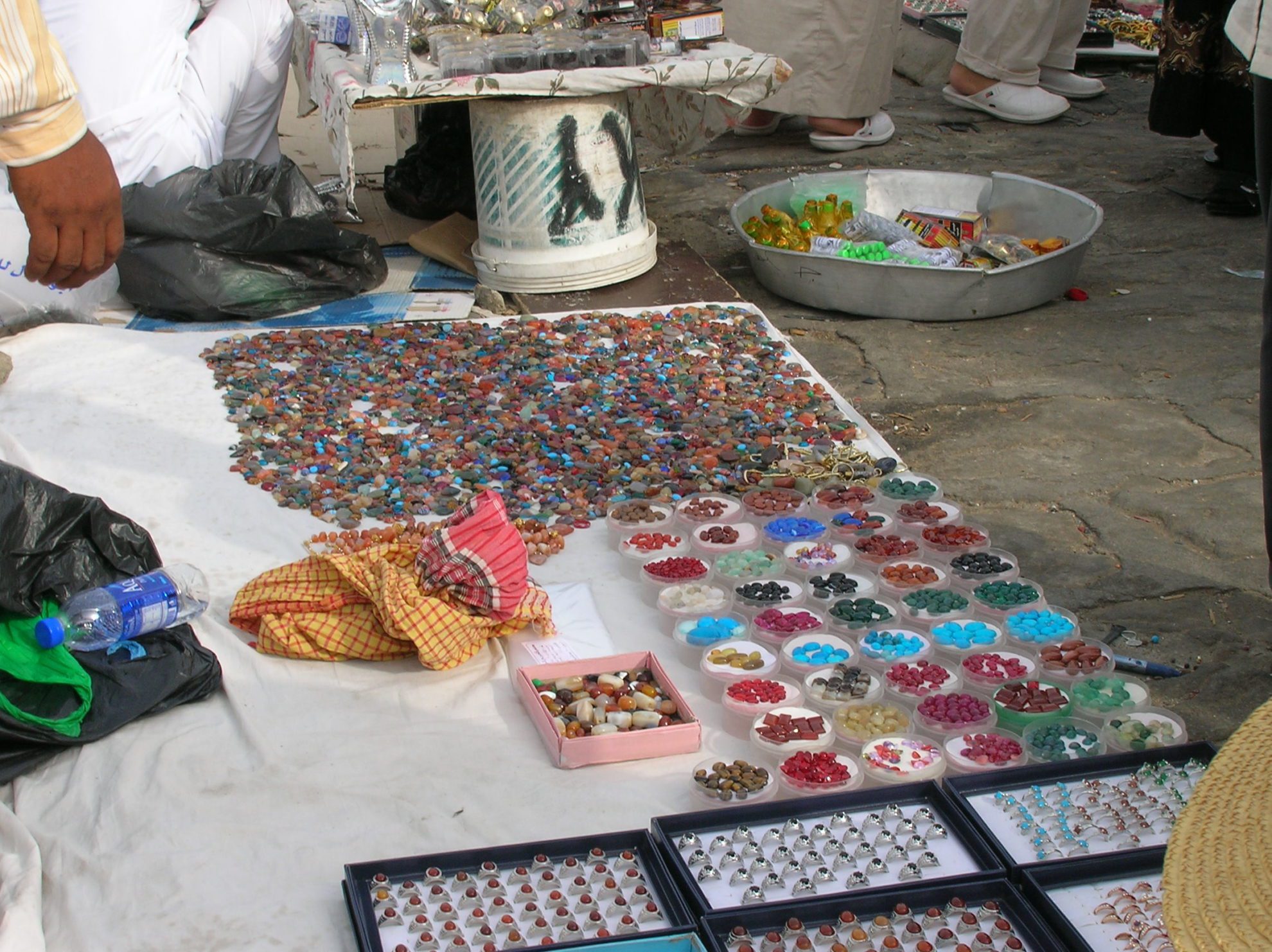
Geologists define it as a variety of chalcedony, a cryptocrystalline form of quartz. Agates can show many distinctive colors, patterns, inclusions, and degrees of translucence. Traces of iron, manganese, titanium, and chromium oxides create the stone's coloration.
Collectors and jewelers value agates modestly, focusing more on the skill and artistic work that goes into the finished jewelry than the raw material's inherent worth. Larger agates that showcase distinctive, fine, or landscape-like color patterns fetch higher prices. Custom-cut stones or those from prized locations typically command premium prices.
Gem enthusiasts appreciate several popular varieties, such as:
Gem hunters discover agate stones in many locations around the world. Brazil is one of the productive sources of banded agates. Mexico is an important source of lace agates.
Artisans have long used dyeing as a primary enhancement technique for agates. Chalcedony stones' porous structure allows them to absorb dyes easily.
Typically, gem hunters find agates as small nodules. However, these stones can occasionally grow into massive formations weighing several pounds.
Many agates undergo commercial dyeing processes. Banded agates, in particular, often feature artificially enhanced colors. Ethical gem dealers always disclose these enhancements to consumers, ensuring transparency in the marketplace.



When you join the IGS community, you get trusted diamond & gemstone information when you need it.
What you'll learn in this article:
Agate is a remarkable variety of chalcedony, a cryptocrystalline form of quartz that occurs naturally in an incredible range of colors and patterns. Its patterns, translucency, and sometimes moss-like inclusions can distinguish agates from other chalcedonies.
Some notable facts about agate stone include:
Gemologists usually describe agate varieties by their color patterns, inclusions, or sources. The color patterns in agates usually take the form of flat or concentric layers or bands. Mossy or dendritic ("tree-like") inclusions can sometimes create the impression of vegetation and landscapes.
Banded agates feature regular color layers and bright colors, making them incredibly popular. However, keep in mind that many of the richly colored banded agates you find for sale are dyed commercially. Although banded agates occur all over the world, Brazil stands out as one of the most productive sources.
These unique varieties contain intriguing mineral oxide inclusions that can show any color. The appearance of these inclusions determines the variety as follows:
Some remarkable agates have inclusions that can create the appearance of entire landscapes within them, complete with lakes, shorelines, trees, and shrubs. Collectors particularly treasure these "natural picture" stones.
Due to inclusions of plate-like crystals of iron hydroxides called limonite, fire agates exhibit stunning iridescence. Careful cutting and polishing can enhance this effect.
Characterized by delicate designs, lace agates show bands with intricate swirls and loops. Mexico is one of the premier sources of this material.
Fossilized ancient tree trunks and limbs may have their organic components replaced by agate stone over millions of years. In some cases, their woody structure may also be preserved and visible with a microscope. The agate's color may be very bright and strong.
The value of agates is generally quite modest. Three main factors determine the prices of these stones:
For more information on agate value, consult our comprehensive guides to buying agates and moss agate engagement rings.
For information on synthetic or lab-made quartz in general, consult our quartz gem listing.
An ancient enhancement technique for agates, dyeing remains a common practice. (Chalcedony stones are relatively porous, which makes dyeing these pieces easy). Dyeing is usually a stable process for agates.
A celebrated and secret process for dyeing agates originated in Idar-Oberstein, Germany, during the 19th century. When the local deposits were depleted, emigrants to South America shipped gray agates back to Idar-Oberstein. The resulting dyed agates proved extraordinary.
Enhancements should be disclosed to consumers to ensure marketplace transparency.
Agate stones come from many locations worldwide:
Agates typically form as nodules but can occasionally develop into masses weighing several pounds and spanning many inches in diameter.
Geologists define it as a variety of chalcedony, a cryptocrystalline form of quartz. Agates can show many distinctive colors, patterns, inclusions, and degrees of translucence. Traces of iron, manganese, titanium, and chromium oxides create the stone's coloration.
Collectors and jewelers value agates modestly, focusing more on the skill and artistic work that goes into the finished jewelry than the raw material's inherent worth. Larger agates that showcase distinctive, fine, or landscape-like color patterns fetch higher prices. Custom-cut stones or those from prized locations typically command premium prices.
Gem enthusiasts appreciate several popular varieties, such as:
Gem hunters discover agate stones in many locations around the world. Brazil is one of the productive sources of banded agates. Mexico is an important source of lace agates.
Artisans have long used dyeing as a primary enhancement technique for agates. Chalcedony stones' porous structure allows them to absorb dyes easily.
Typically, gem hunters find agates as small nodules. However, these stones can occasionally grow into massive formations weighing several pounds.
Many agates undergo commercial dyeing processes. Banded agates, in particular, often feature artificially enhanced colors. Ethical gem dealers always disclose these enhancements to consumers, ensuring transparency in the marketplace.


Agate is a fascinating gemstone that captivates collectors and jewelry enthusiasts alike with its extraordinary diversity and beauty. This comprehensive guide will take you on a journey through the enchanting world of agate stones, revealing their unique characteristics and remarkable variations.