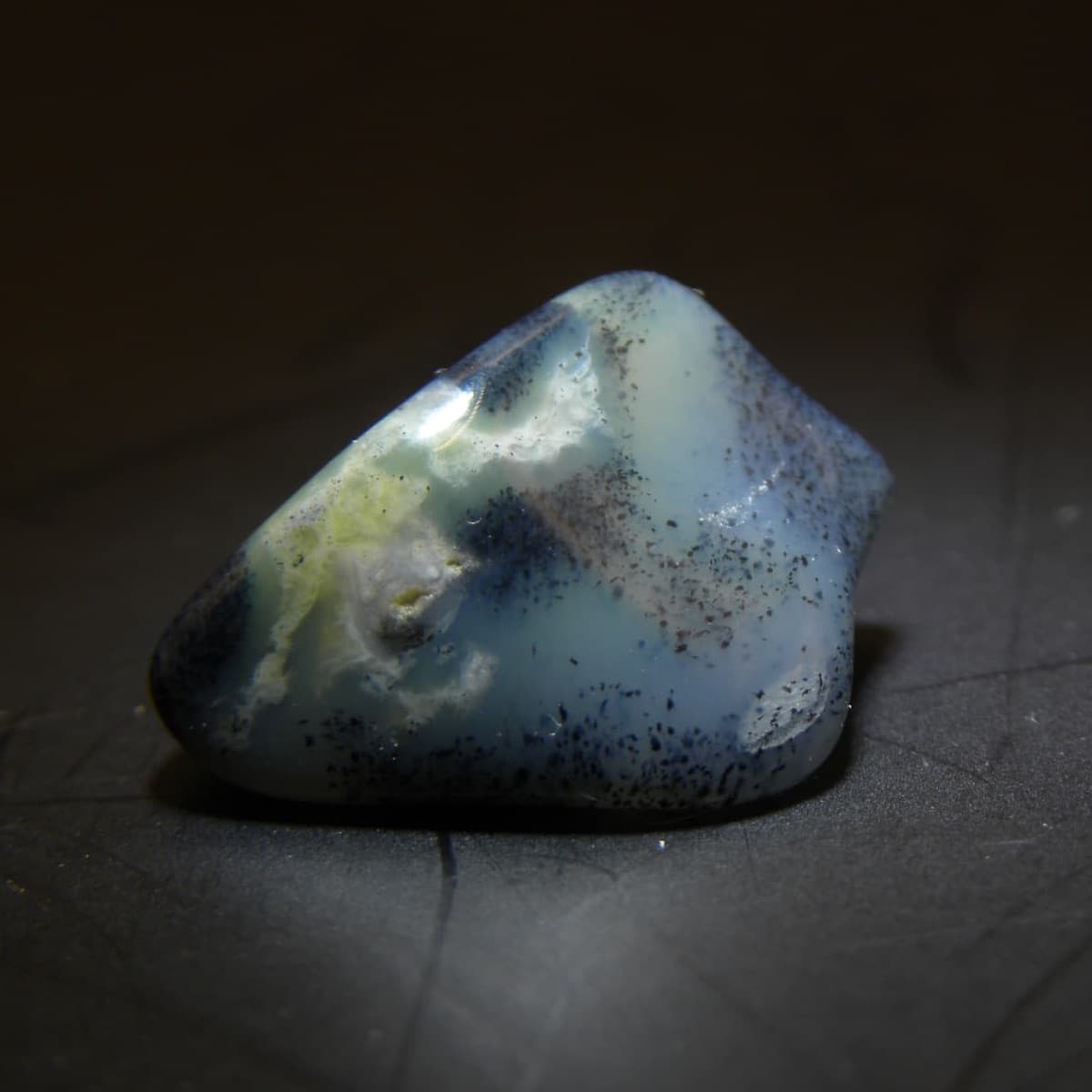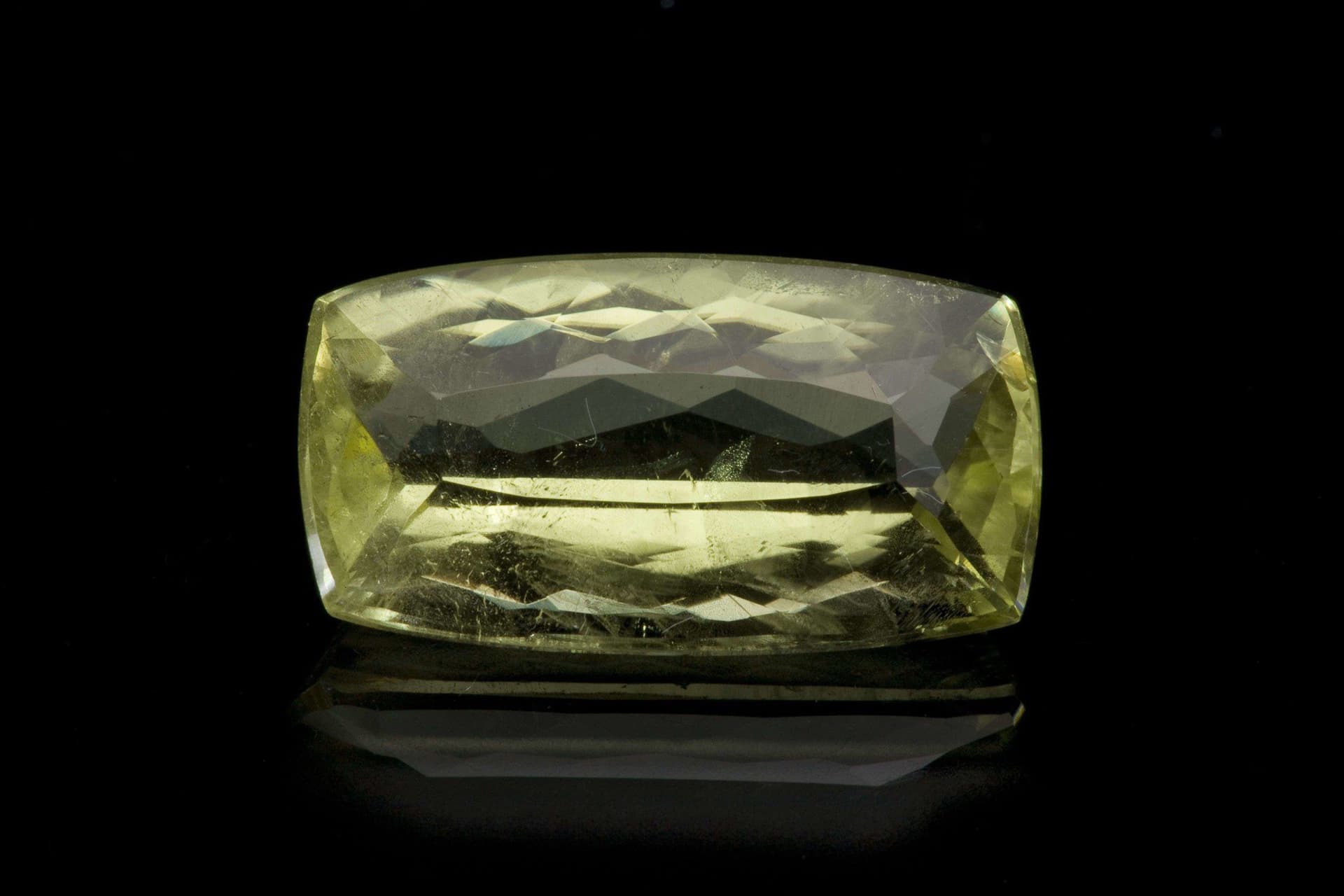
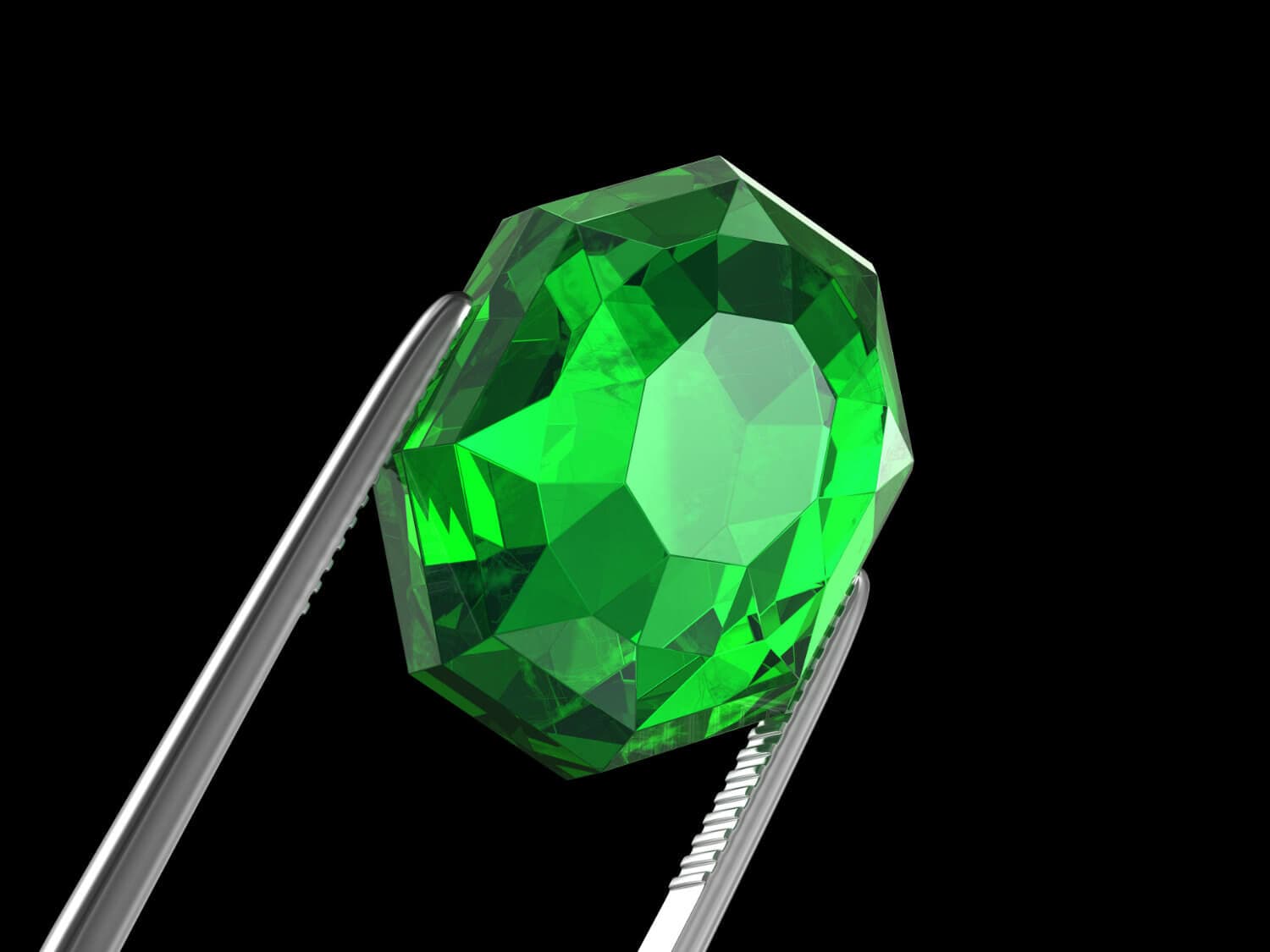
Brazilianite's lovely green to yellow colors make it a must for gem collectors. Large faceted stones are often flawed, but smaller cut gems can make beautiful jewelry pieces.
1 Minute Read
Although brazilianites have a moderate hardness, they also have good cleavage and a tendency to fracture. Thus, protective settings and occasional wear are good ideas if you want to wear these gems in jewelry, especially rings.
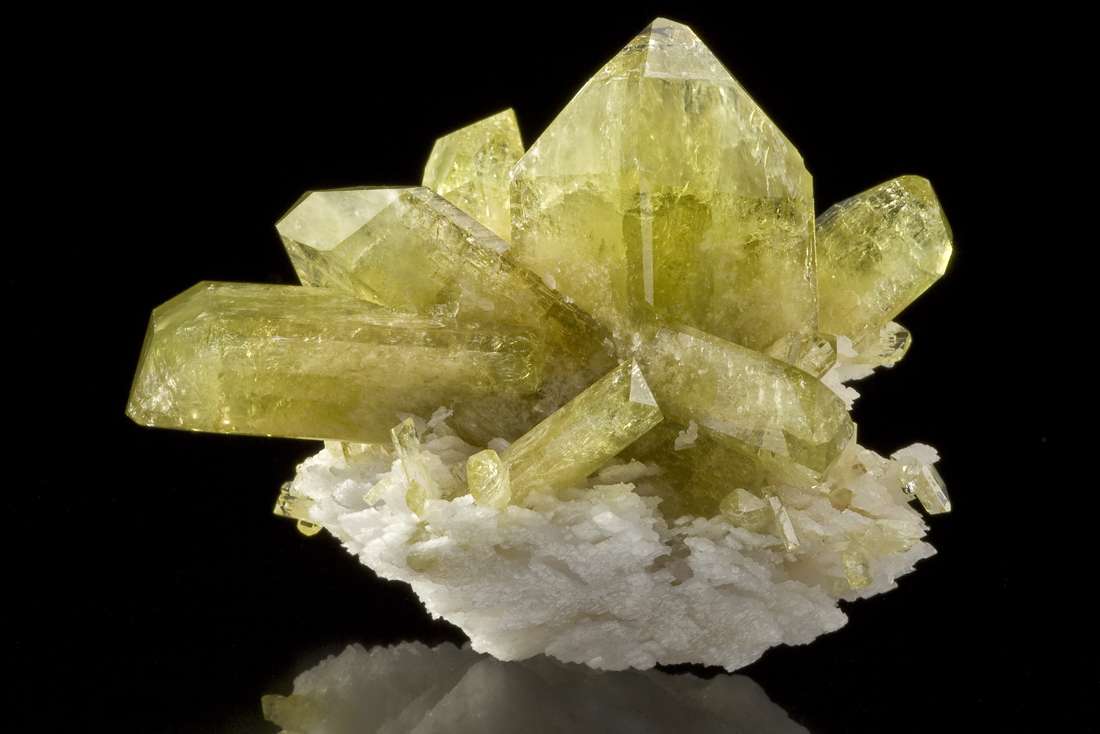
Discovered in Brazil in 1944, brazilianites are primarily collector's gemstones. Many museums display large, uncut brazilianites as stunning crystal specimens. Although pieces such as these could yield large gems, clean faceted gems over 15 carats are a great rarity.
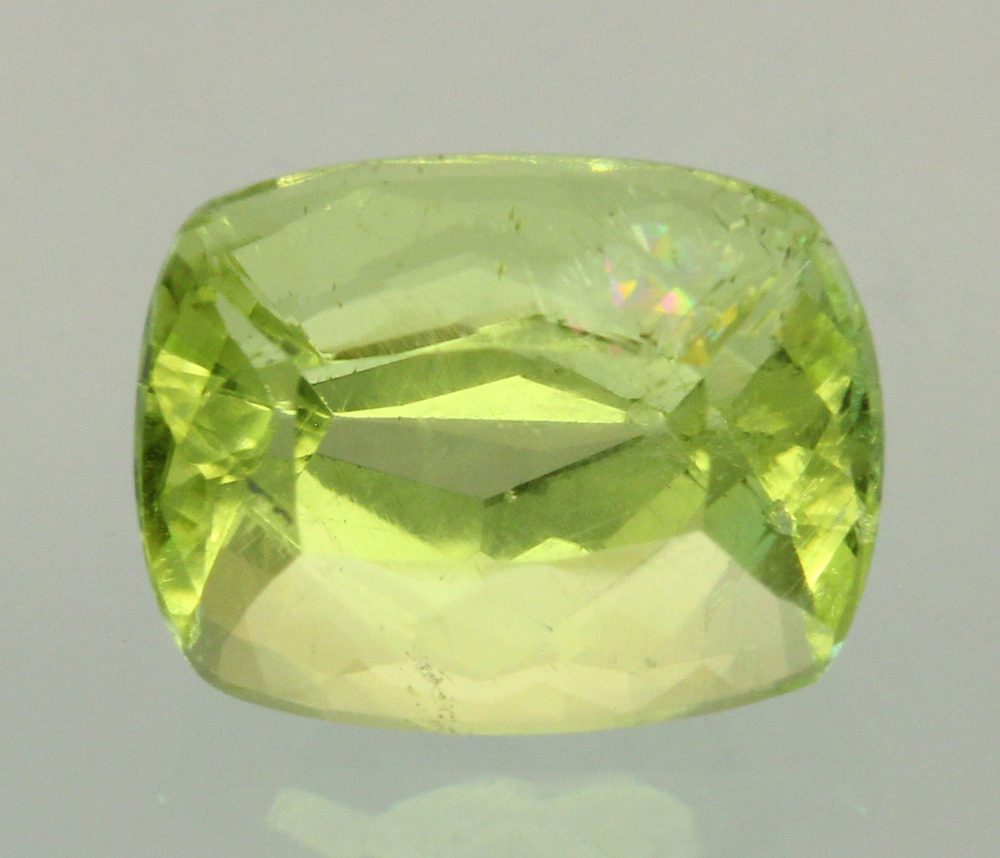
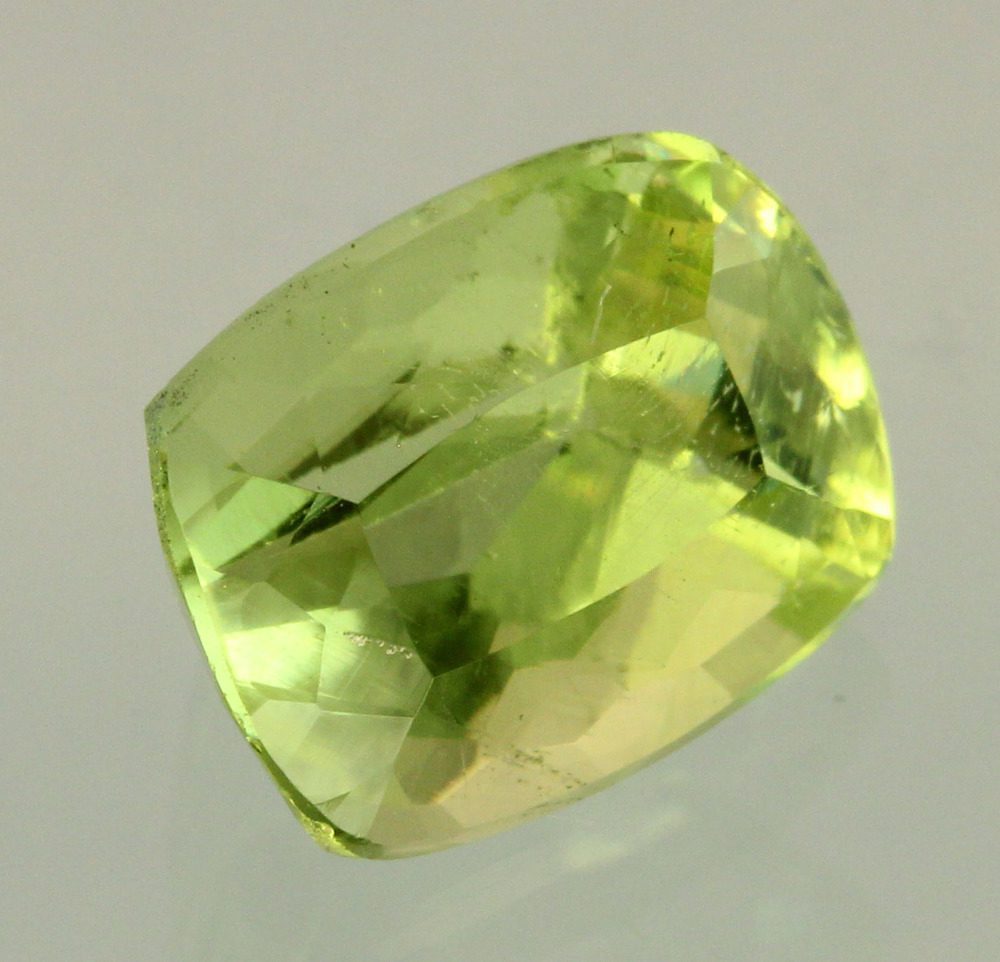
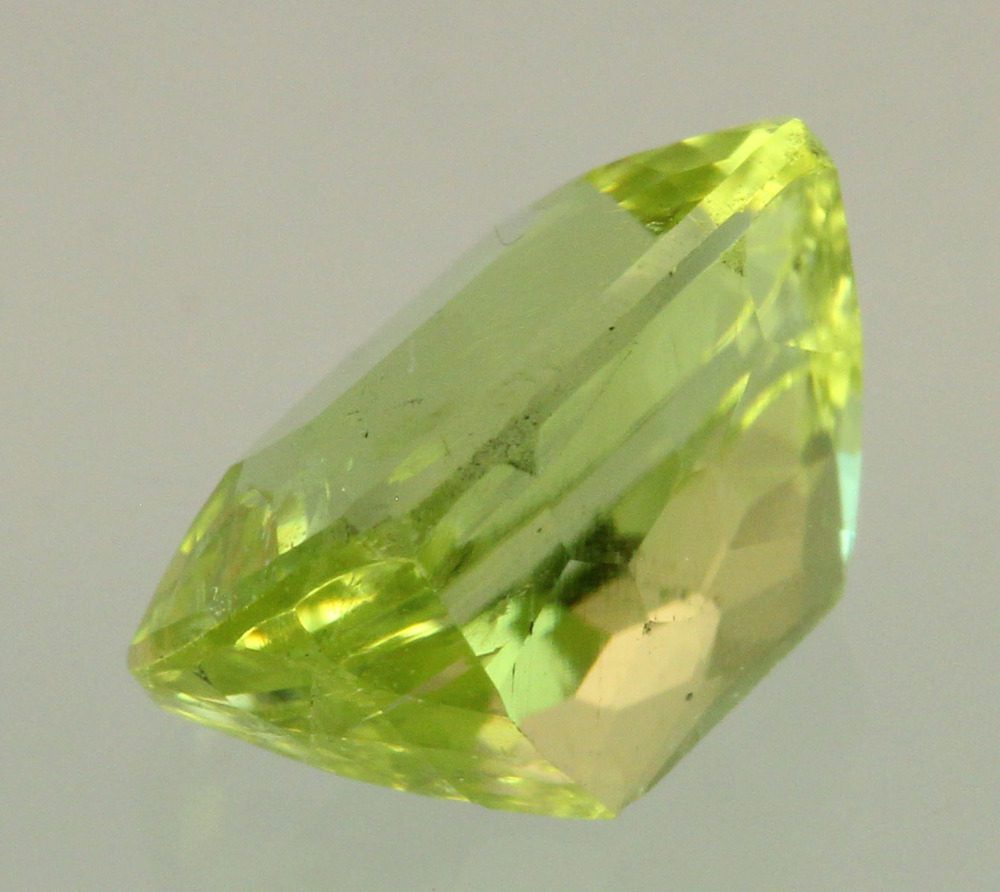
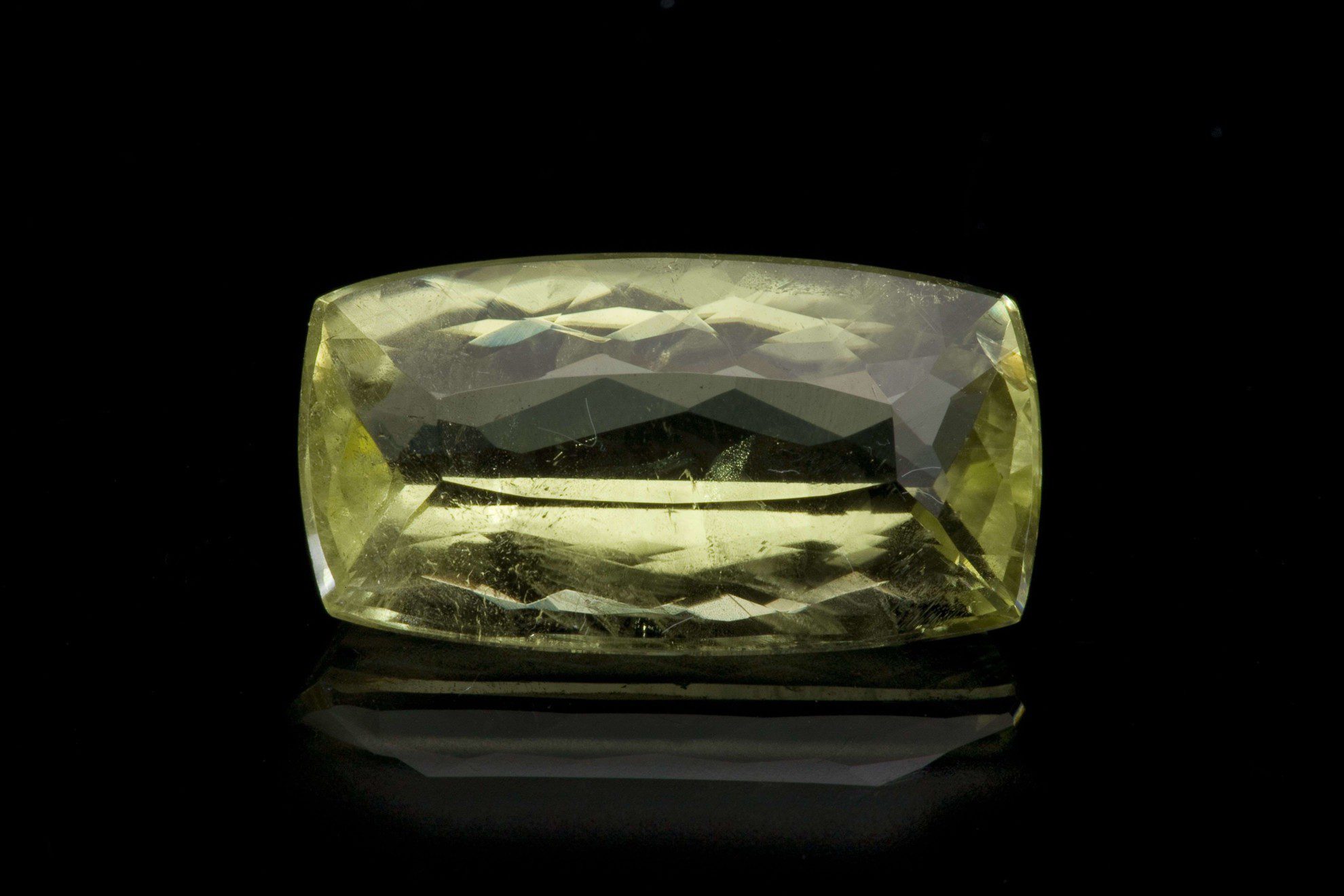
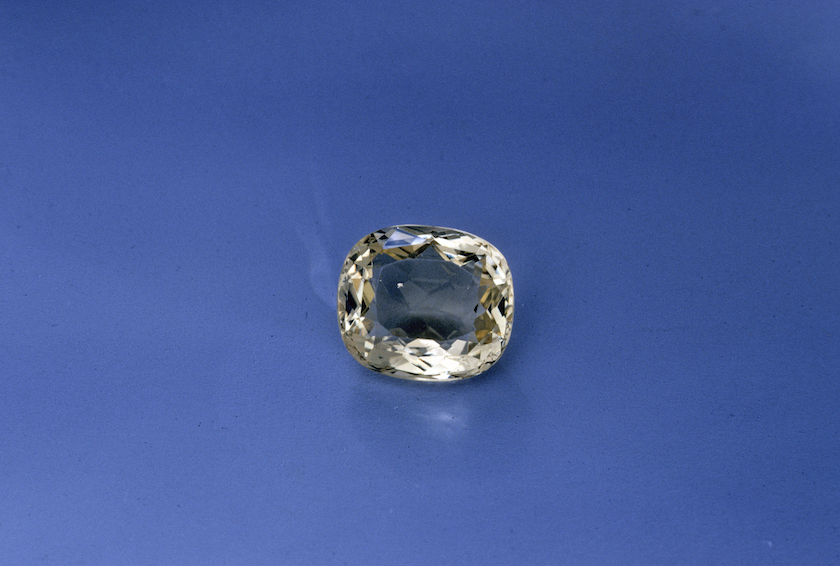
Yellowish green brazilianite, 2.23 cts, 8.7 x 6.8 x 5.4 mm, cushion cut, Brazil. © ARK Rare Gems. Used with permission.
Brazil, notably Conselheira Pena, Minas Gerais, remains the principal source of gem quality material in crystals up to large sizes.
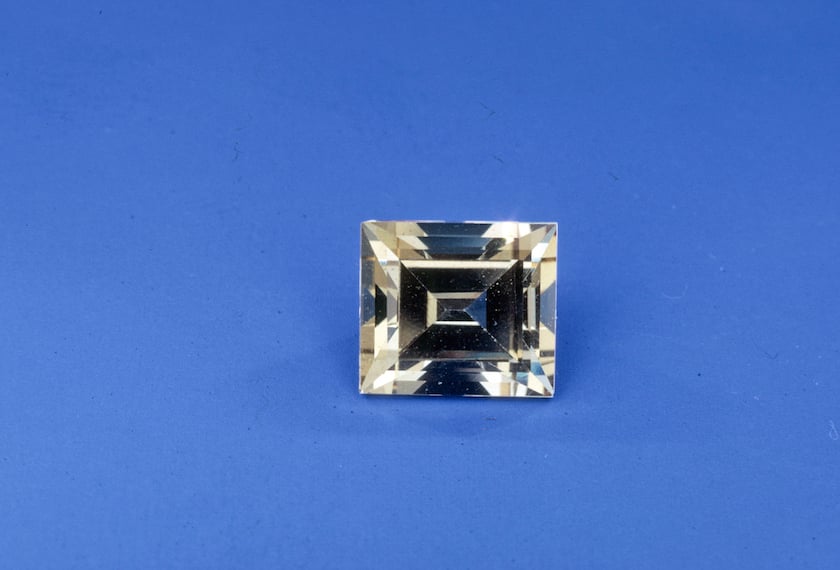
The Palermo Mine in Grafton, New Hampshire and sites in Yukon, Canada also yield fine but smaller specimens.
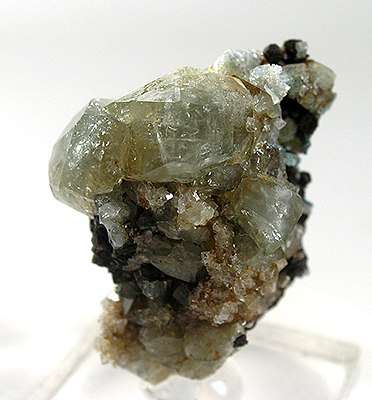
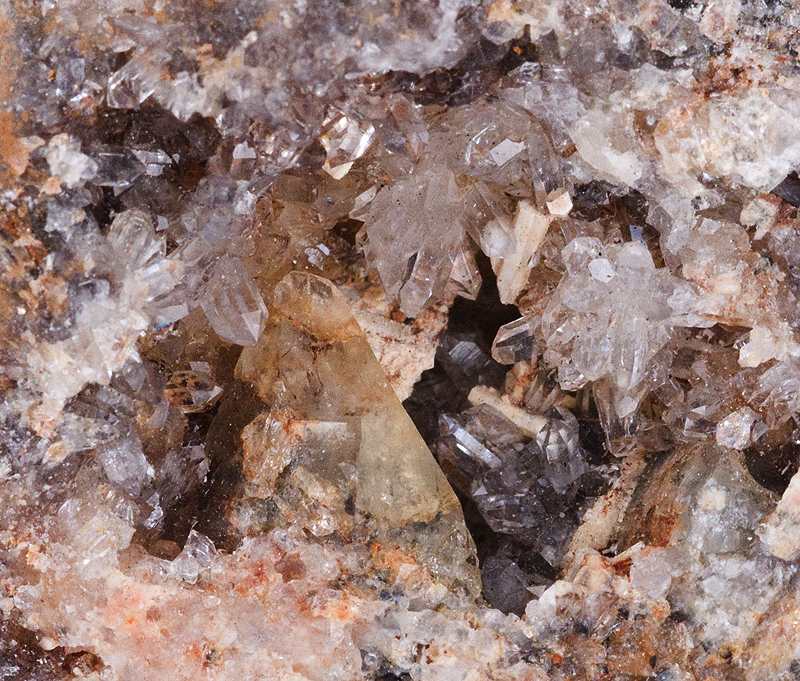
Crystals from Brazil range in size up to 12 x 8 cm. Although some large gems have been cut, most gems range from one to ten carats, or even smaller. Cut stones over five carats are scarce today.
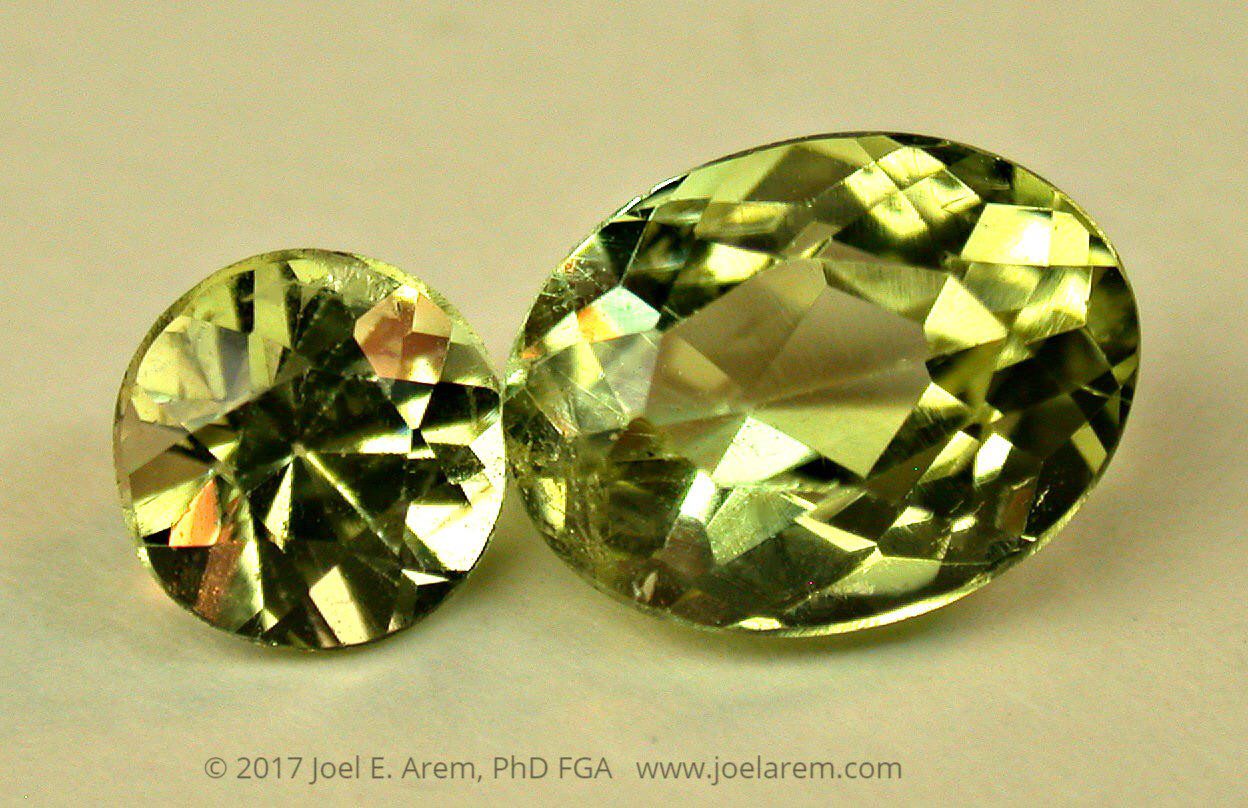
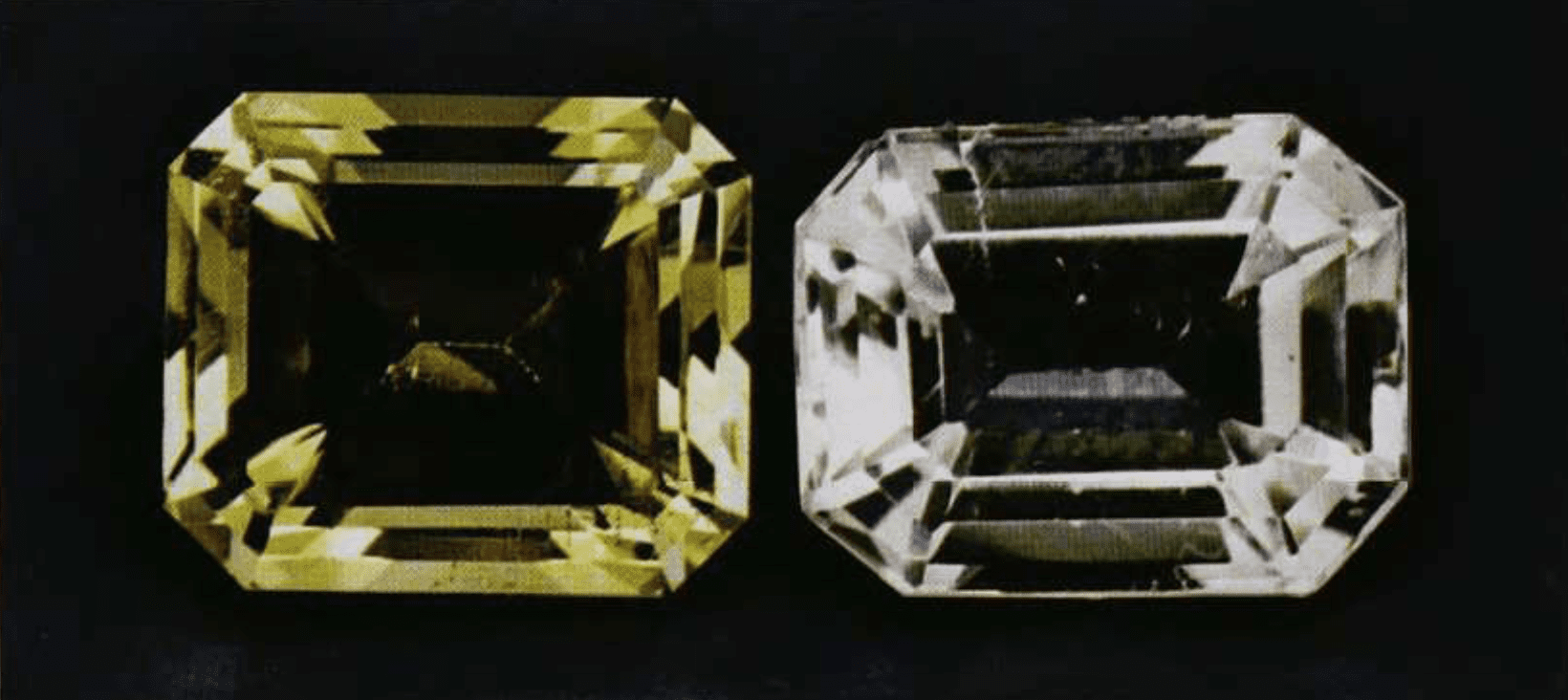
Heating brazilianite gems up to 140º C/284º F can lead to color loss. Heating up to 300º C/572º F will turn them colorless. A jeweler's torch will easily reach these temperatures, so be wary if you're taking a jewelry piece for repairs. Avoid mechanical cleaning such as steam or ultrasonic processes. Instead, use a soft brush, mild detergent, and warm water for cleaning. Consult our gemstone jewelry cleaning guide for more recommendations.

When you join the IGS community, you get trusted diamond & gemstone information when you need it.
Although brazilianites have a moderate hardness, they also have good cleavage and a tendency to fracture. Thus, protective settings and occasional wear are good ideas if you want to wear these gems in jewelry, especially rings.
Discovered in Brazil in 1944, brazilianites are primarily collector's gemstones. Many museums display large, uncut brazilianites as stunning crystal specimens. Although pieces such as these could yield large gems, faceted gems over 15 carats are a great rarity.
Yellowish green brazilianite, 2.23 cts, 8.7 x 6.8 x 5.4 mm, cushion cut, Brazil. © ARK Rare Gems. Used with permission.
Brazil, notably Conselheira Pena, Minas Gerais, remains the principal source of gem quality material in crystals up to large sizes.
The Palermo Mine in Grafton, New Hampshire and sites in Yukon, Canada also yield fine but smaller specimens.
Crystals from Brazil range in size up to 12 x 8 cm. Although some large gems have been cut, most gems range from one to ten carats, or even smaller. Cut stones over five carats are scarce today.
Heating brazilianite gems up to 140º C/284º F can lead to color loss. Heating up to 300º C/572º F will turn them colorless. A jeweler's torch will easily reach these temperatures, so be wary if you're taking a jewelry piece for repairs. Avoid mechanical cleaning such as steam or ultrasonic processes. Instead, use a soft brush, mild detergent, and warm water for cleaning. Consult our gemstone jewelry cleaning guide for more recommendations.


Brazilianite’s lovely green to yellow colors make it a must for gem collectors. Large faceted stones are often flawed, but smaller cut gems can make beautiful jewelry pieces.