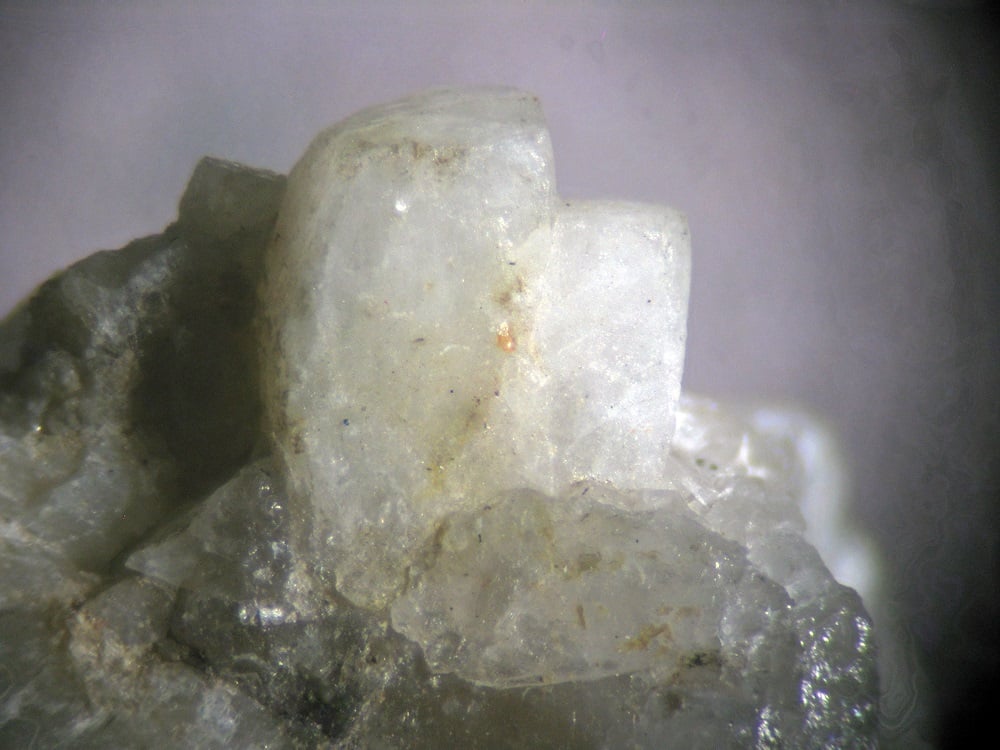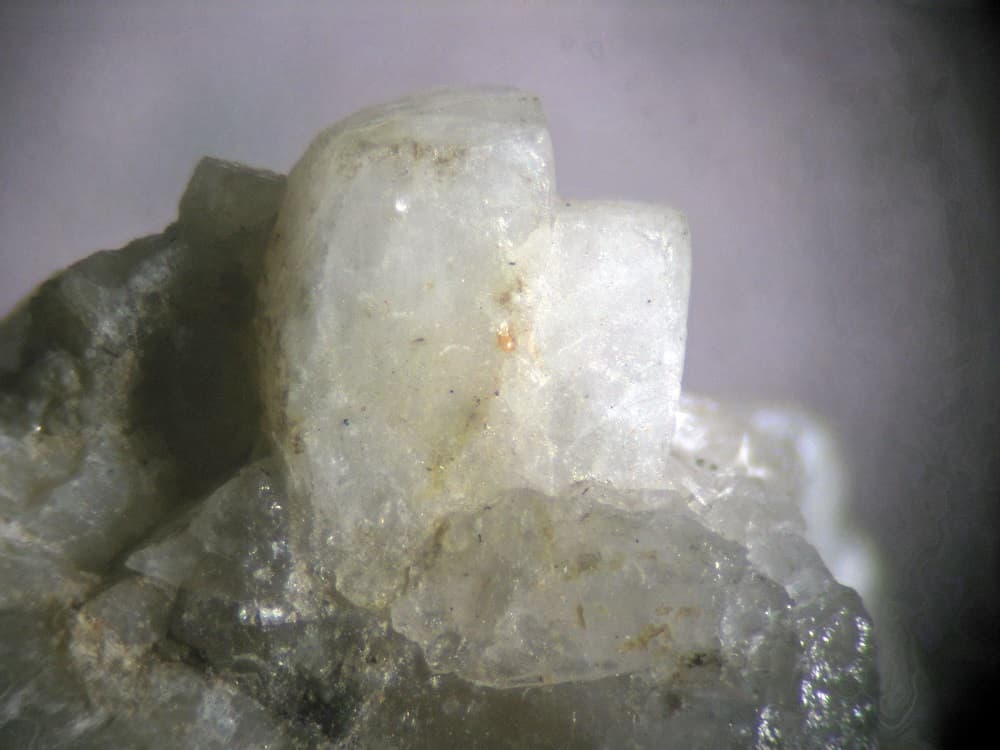
Hurlbutite is an extremely rare mineral. Minute, colorless faceted stones have been cut from fragments.
1 Minute Read
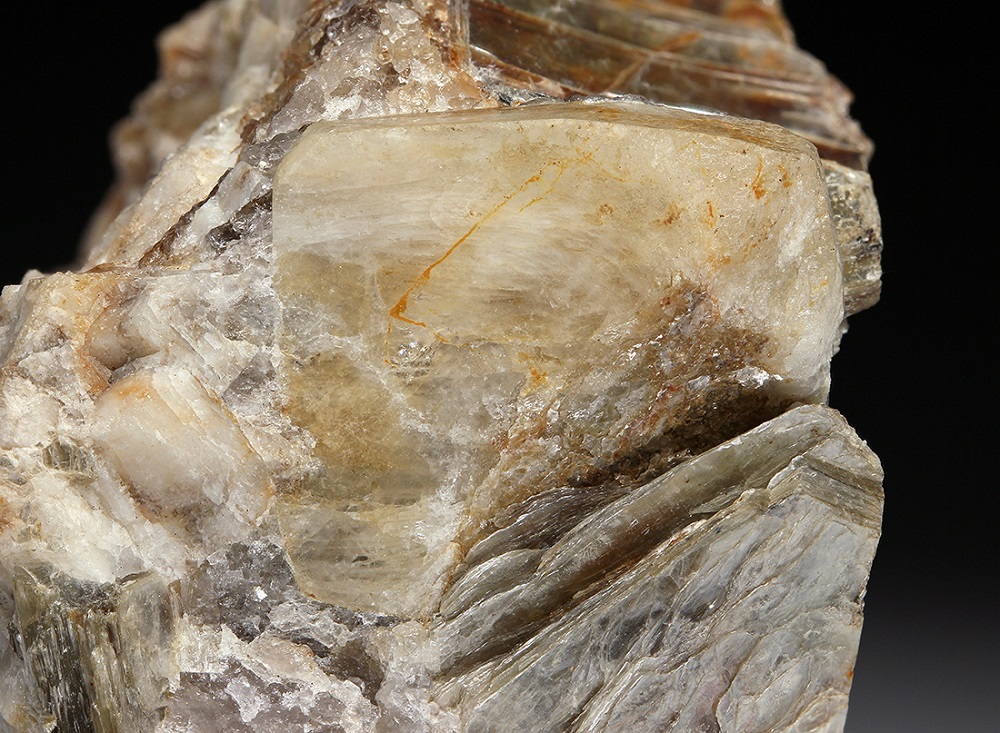
To date, only hurlbutite from the type locality, Chandlers Mill, Newport, New Hampshire, has yielded clean, cuttable gem material. However, finding this seldom seen stone as a faceted gem would be quite unusual.
Strontiohurlbutite (SrBe2(PO4)2) is the strontium (Sr) analogue of the hurlbutite group. Hurlbutites are calcium (Ca) dominant. Both contain the rare element beryllium (Be).
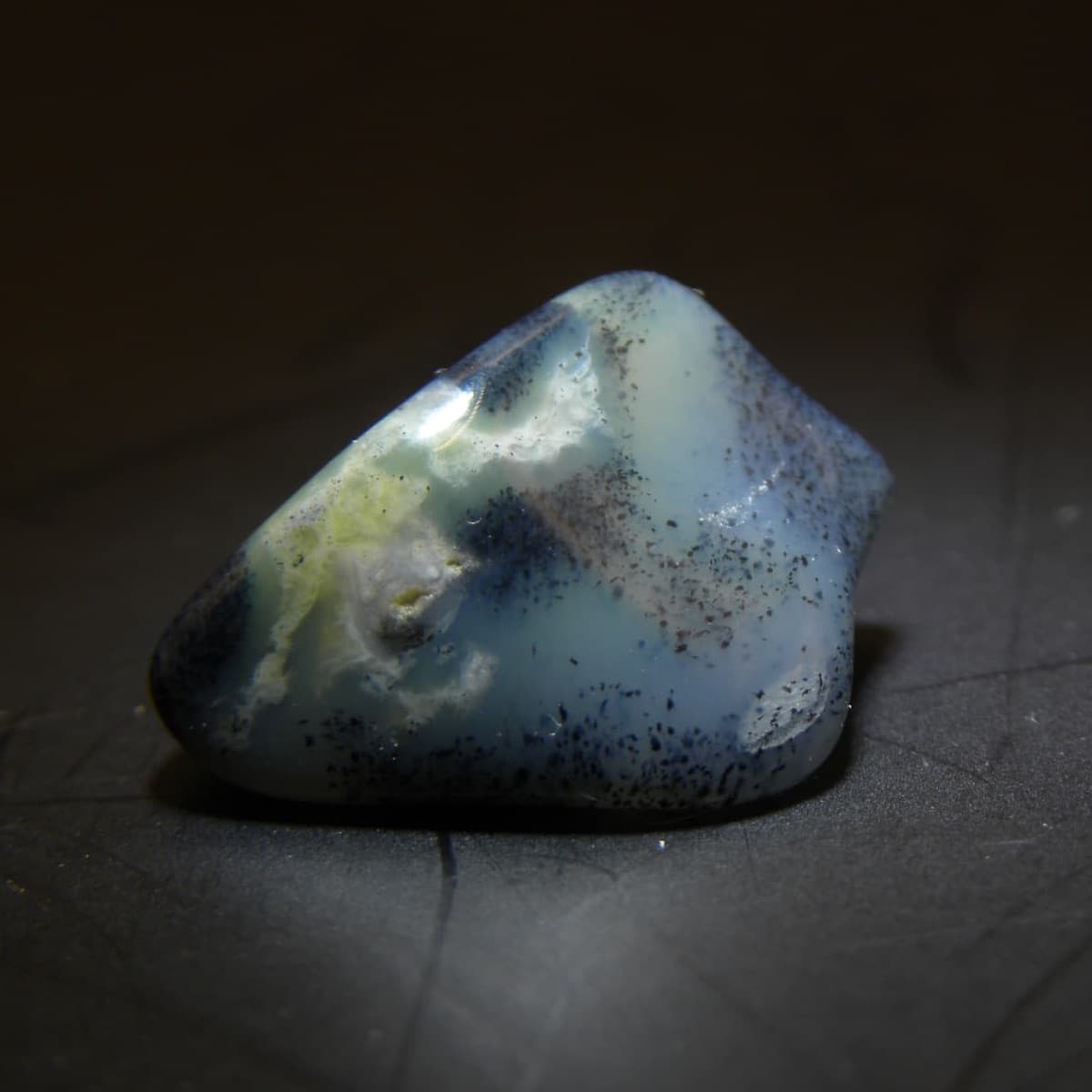
Strontiohurlbutites have a light blue color, while hurlbutites range from white to greenish white.
In laboratories, scientists have created both hurlbutites and strontiohurlbutites for research purposes using a hydrothermal process. However, no jewelry use of these synthetics is known.
None known.
Gem-quality hurlbutites come from the Smith Mine, Chandlers Mill, Newport, New Hampshire.
Other sources include:
Fujian Province, China produces strontiohurlbutite.
Faceted gems, transparent and colorless, all fall under one carat in size.
You're more likely to find hurlbutites, if at all, in comprehensive mineral collections than jewelry collections. With no cleavage and a hardness of 6, just below quartz, the small, transparent and colorless gems would make interesting conversation pieces if worn with care. (These conversations would likely dwell on their rarity). Consult our Gemstone Jewelry Cleaning Guide for more information.


When you join the IGS community, you get trusted diamond & gemstone information when you need it.
To date, only hurlbutite from the type locality, Chandlers Mill, Newport, New Hampshire, has yielded clean, cuttable gem material. However, finding this seldom seen stone as a faceted gem would be quite unusual.
Strontiohurlbutite (SrBe2(PO4)2) is the strontium (Sr) analogue of the hurlbutite group. Hurlbutites are calcium (Ca) dominant. Both contain the rare element beryllium (Be).
Strontiohurlbutites have a light blue color, while hurlbutites range from white to greenish white.
In laboratories, scientists have using a process. However, no jewelry use of these is known.
None known.
Gem-quality hurlbutites come from the Smith Mine, Chandlers Mill, Newport, New Hampshire.
Other sources include:
Fujian Province, China produces strontiohurlbutite.
Faceted gems, transparent and colorless, all fall under one carat in size.
You're more likely to find hurlbutites, if at all, in comprehensive mineral collections than jewelry collections. With no cleavage and a hardness of 6, just below quartz, the small, transparent and colorless gems would make interesting conversation pieces if worn with care. (These conversations would likely dwell on their rarity). Consult our Gemstone Jewelry Cleaning Guide for more information.

Hurlbutite is an extremely rare mineral. Minute, colorless faceted stones have been cut from fragments.