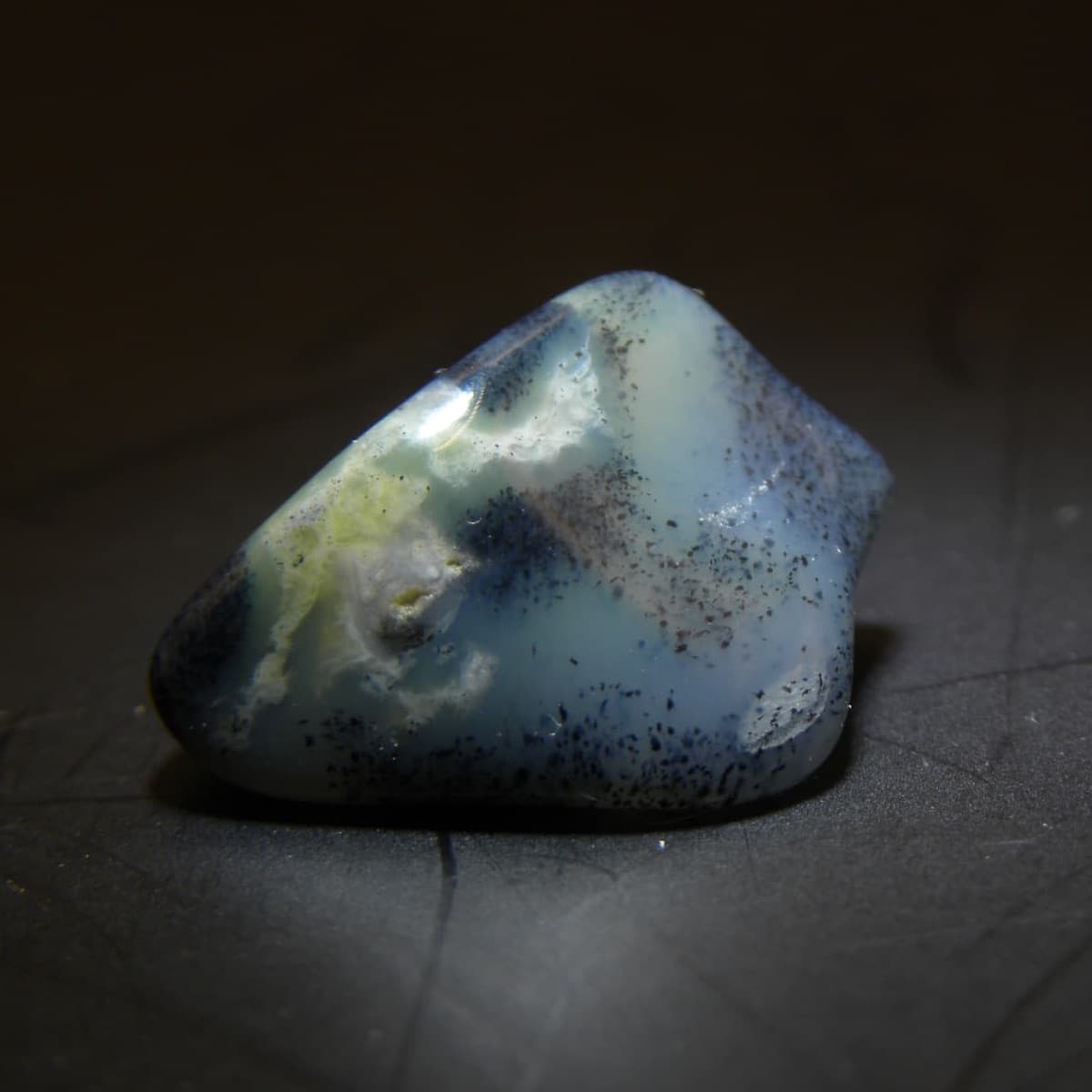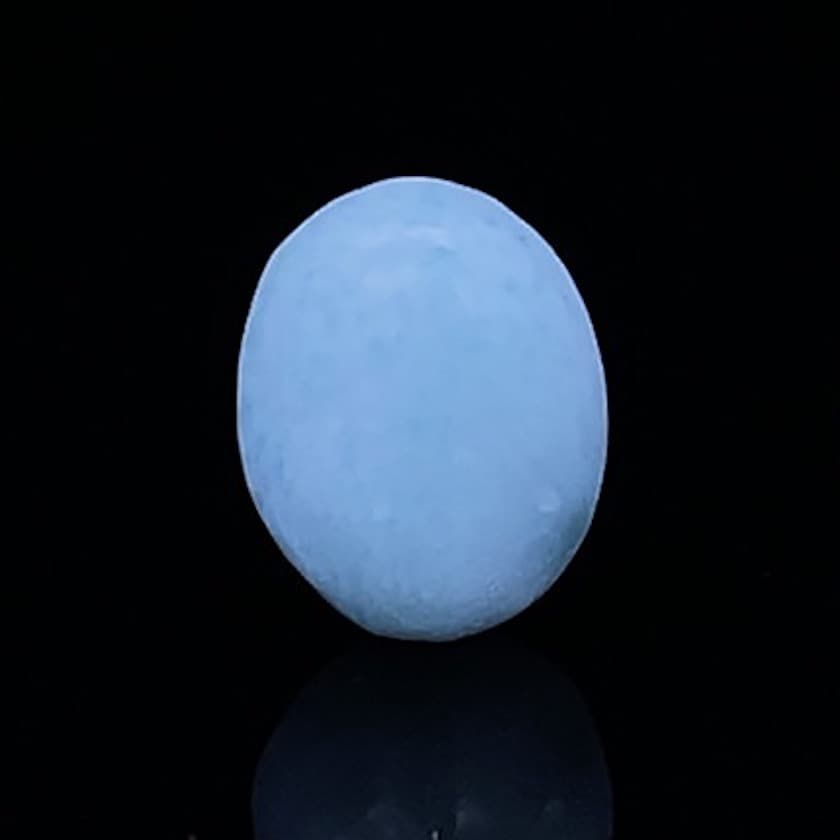
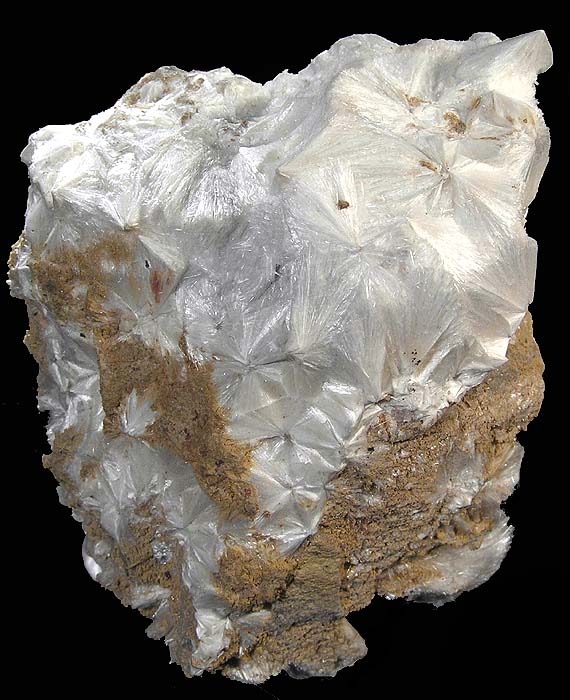
Fibrous pectolite has long been a curiosity for gem collectors. Compact material can make wonderful cabochons, and transparent crystals are rare and usually tiny. Larimar, blue pectolite from the Dominican Republic, has become a popular jewelry stone.
2 Minute Read
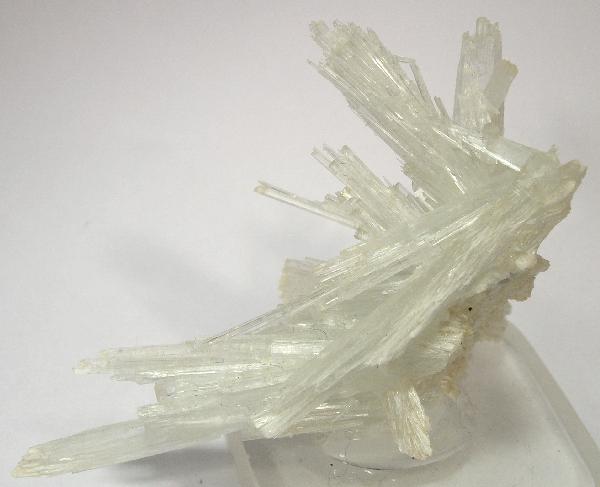
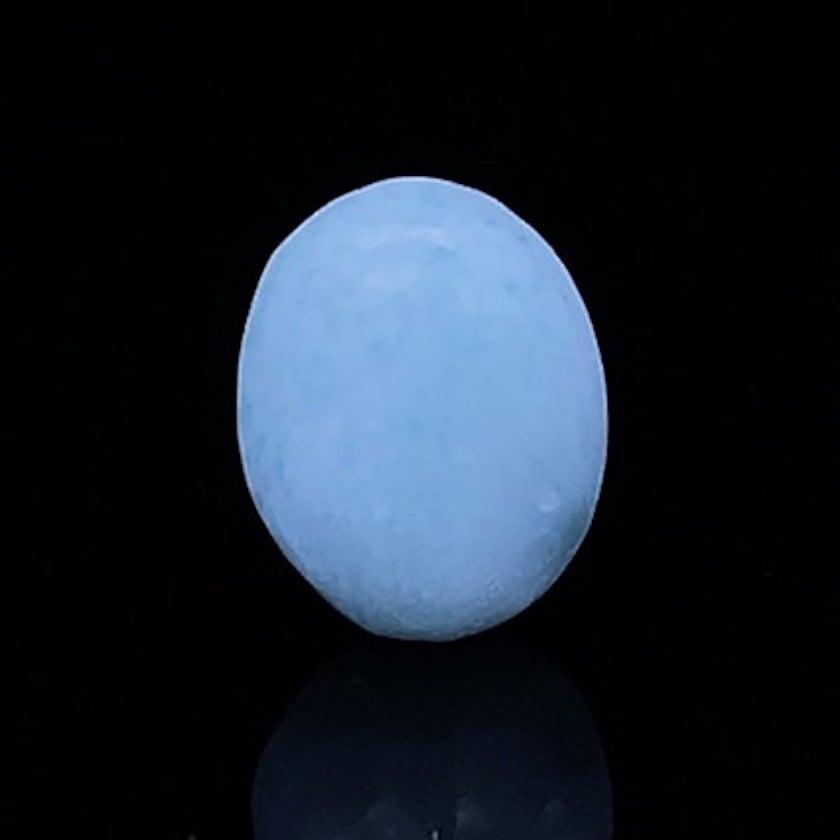
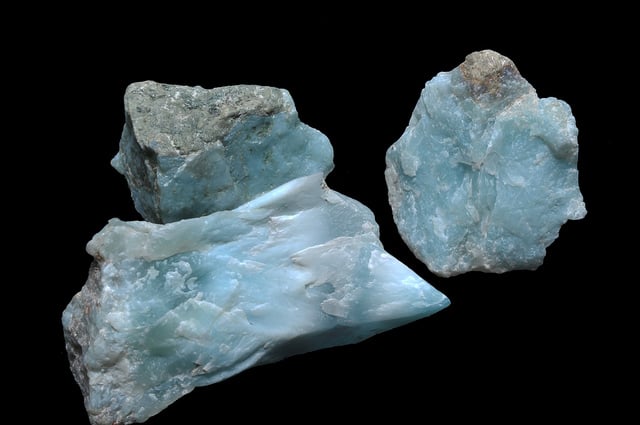
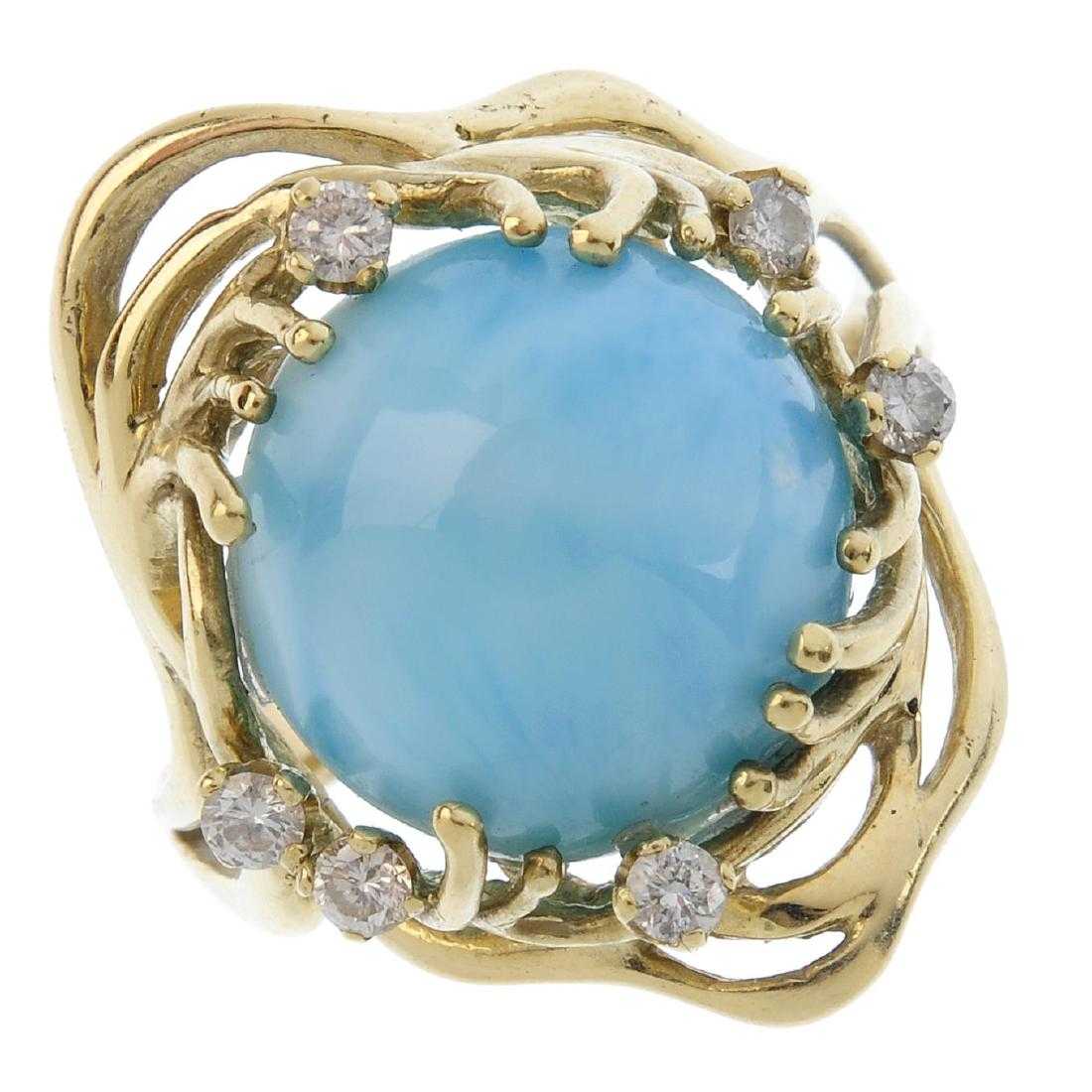
Although the inosilicate mineral pectolite occurs in locations across the globe, these fibrous aggregates are seldom cohesive enough to cut and usually too soft and fragile for jewelry wear. However, if pectolite's fibers grow intertwined, it can become jade-like in toughness as well as appearance. Known by the trade name Larimar, this variety of compact pectolite can take a very high polish. Though locally abundant, Larimar is a rare gem material.
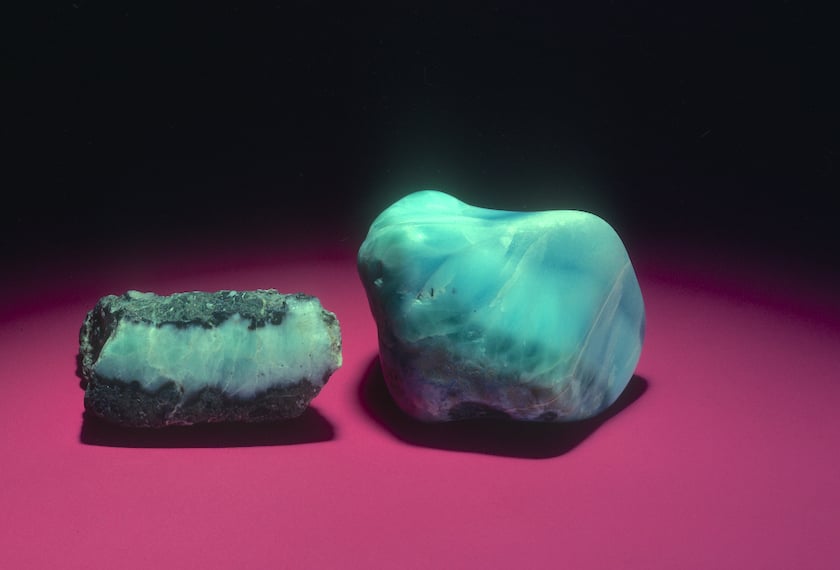
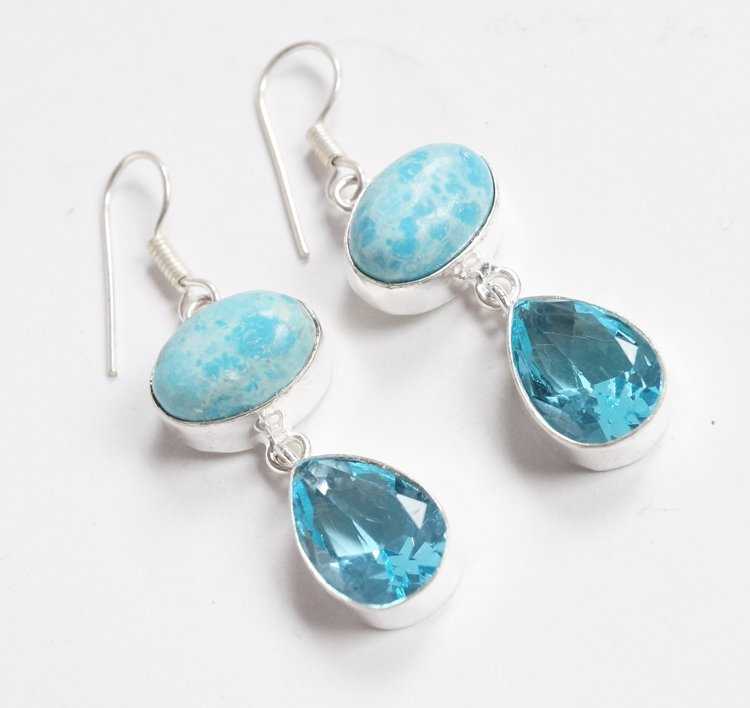
Although pectolite stones of this type, especially Larimar, are relatively tough, their hardness range (from 4.5 to 6) makes them susceptible to scratches. Use protective settings for rings. Pectolite cabs make excellent stones for pendants and earrings.
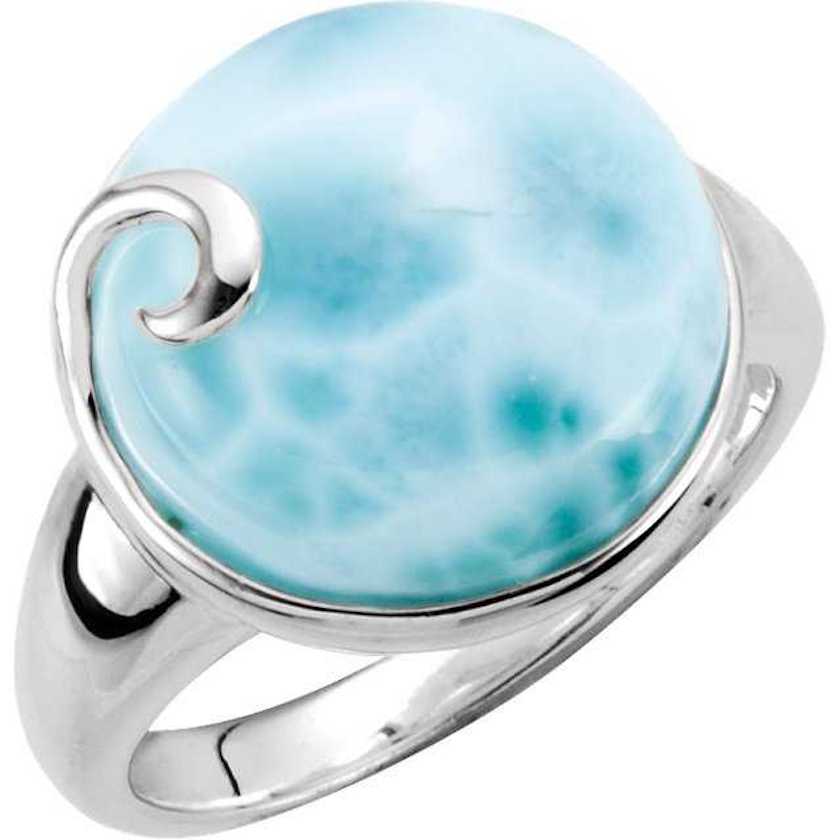
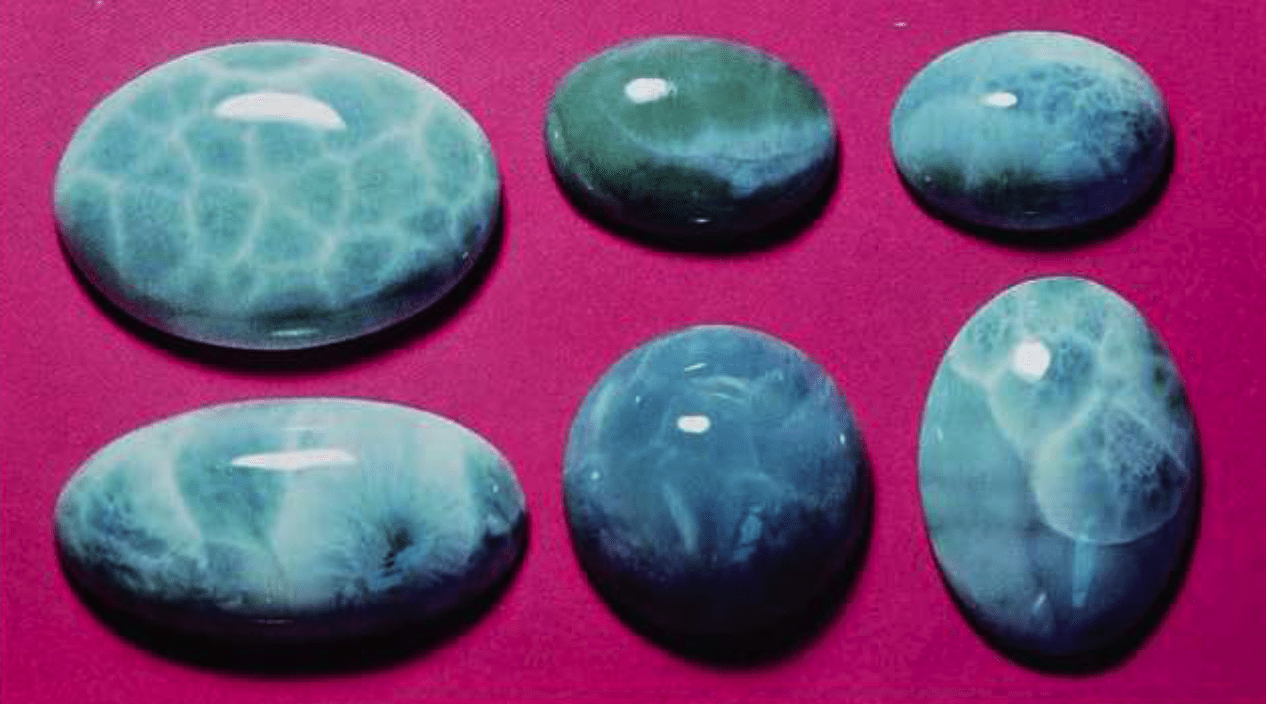
With colors ranging from white to various shades of blue, pectolite from the Dominican Republic is the loveliest in the world. Traces of copper contribute to this blue coloration. The finest stones are dark blue and translucent, but sky-blue specimens with cloud-like patterns are also highly prized.
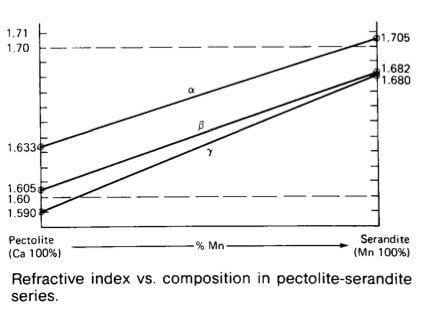
The minerals pectolite and serandite form a series. Pectolite is the calcium (Ca) end member, while serandite is the manganese (Mn) end member.
The refractive indices (RI) of this series vary with the presence of Ca and Mn.
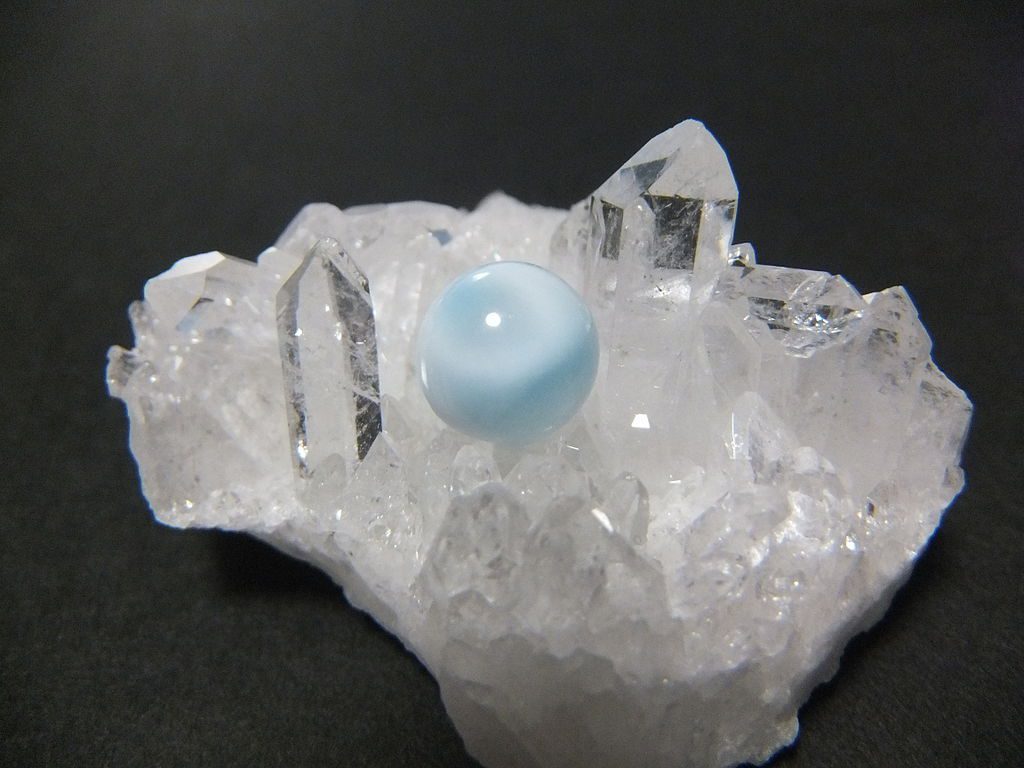
Fibrous material has chatoyancy that can give pectolite cabochons a cat's eye effect.
In longwave (LW) ultraviolet light:
In shortwave (SW) ultraviolet light:
Although no known pectolite synthetics exist, simulants have surfaced, such as ceramics and "Victoria Stone" and "Imori Stone" glass pieces. However, a gemological analysis can easily identify these.
Some Larimar gems may resemble turquoise or dyed howlite, and other compact pectolites may resemble jade. Again, these can usually be distinguished with standard tests.
There are no known common gem treatments for Larimar or other pectolite gems.
The Dominican Republic is the principal source of gem-quality pectolite. Larimar is typically cabbed instead of faceted. Please note: Mindat reported on 9/1/2023 that the Filipinas Larimar Mine in the Dominican Republic is currently "closed for unknown reasons," per the Larimar Museum in Santo Domingo.
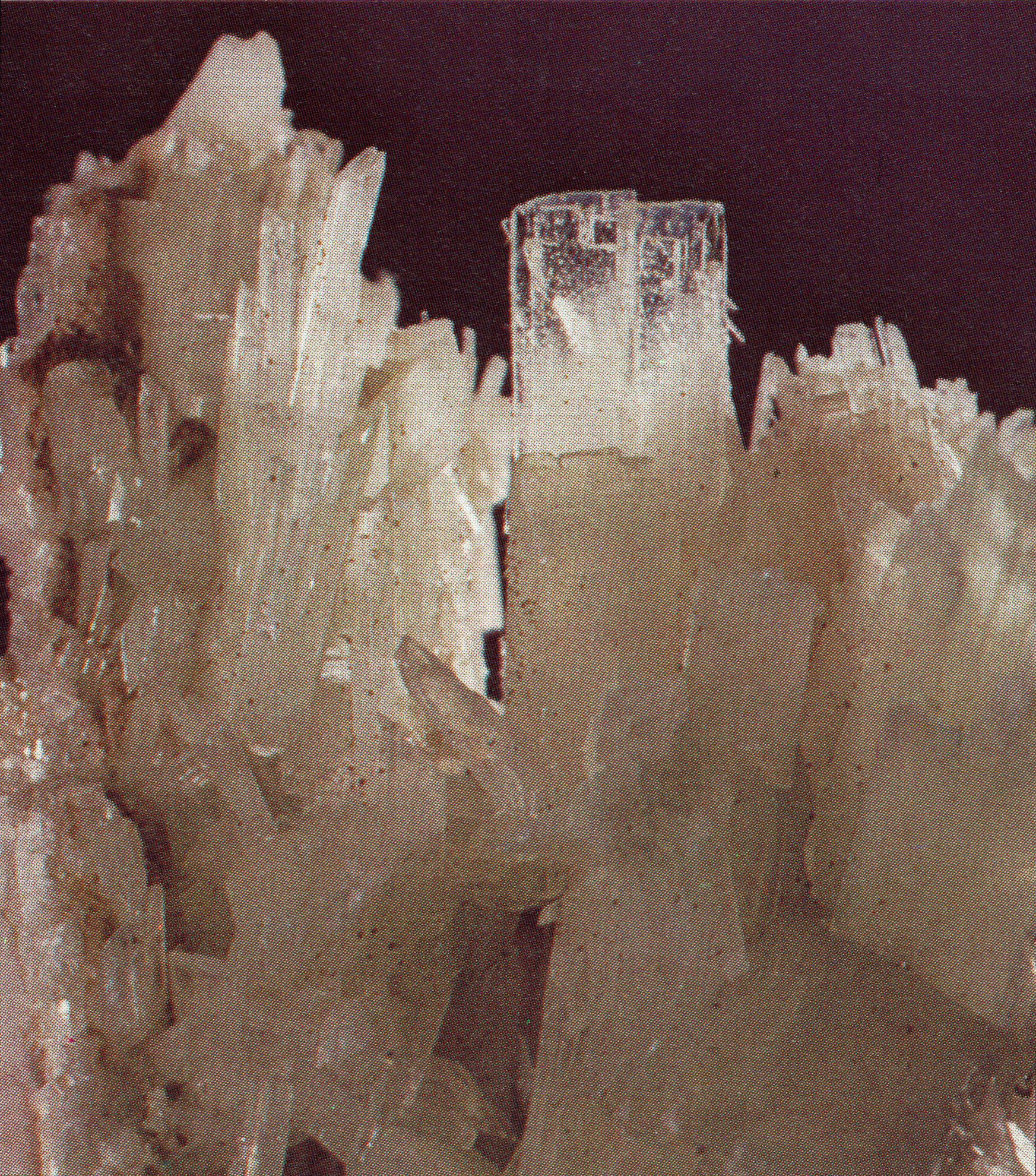
In Canada, the Thetford Mines and Asbestos, Quebec produce magnificent, prismatic crystals. Indeed, these are the only sources of transparent, facetable pectolite, yielding twinned crystals up to 5″ long in colors ranging from white to pale blue-green.
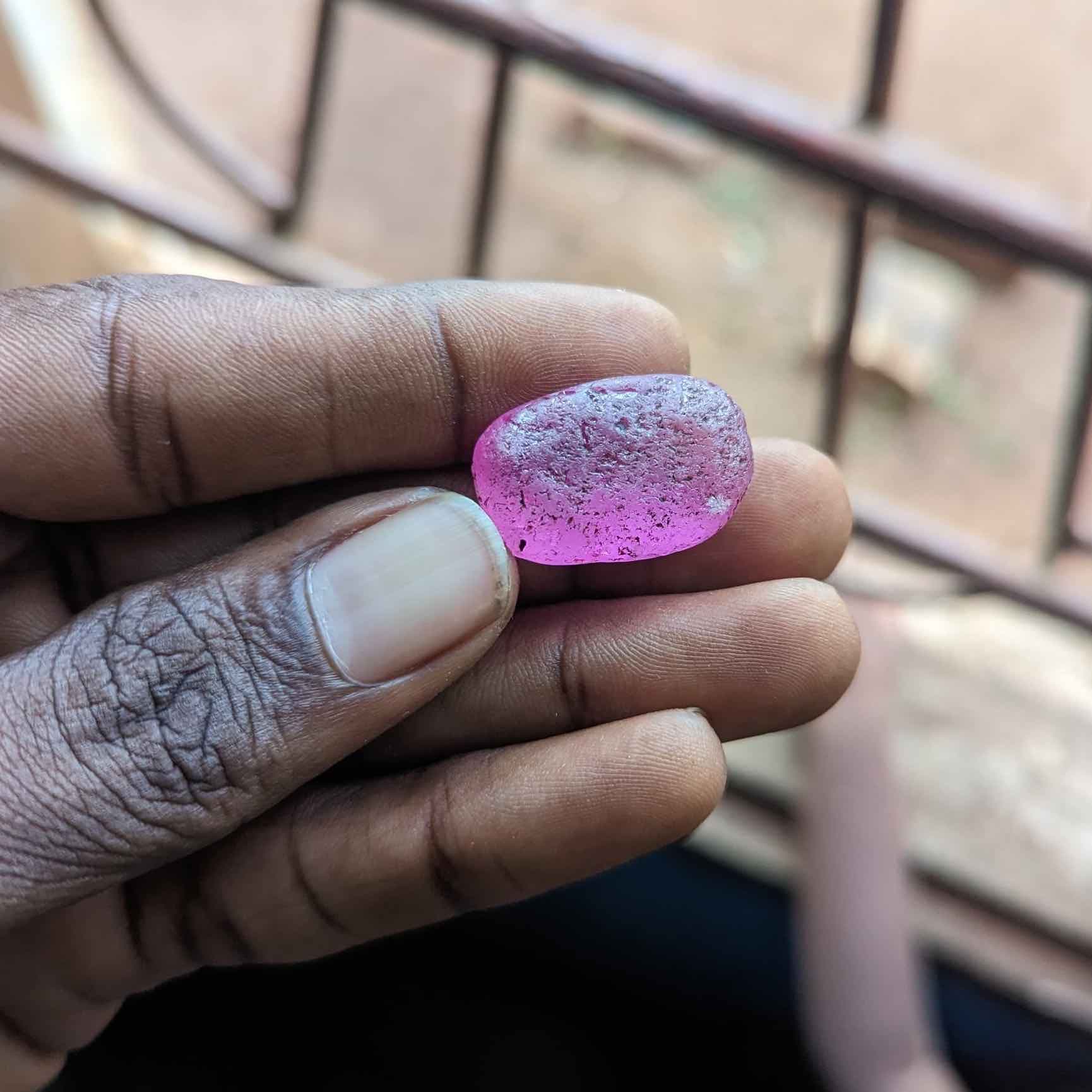
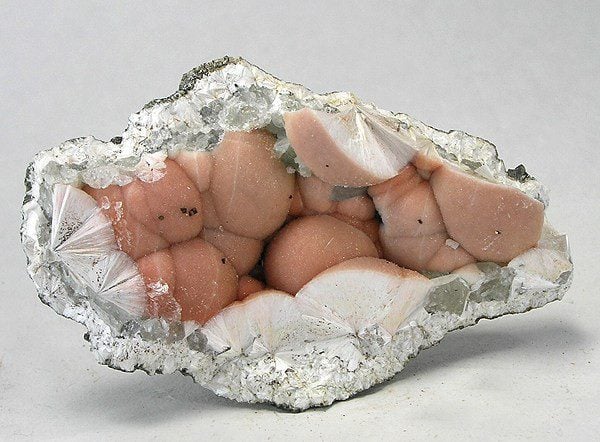
In the United States, Alaska produces massive, jade-like stones (used as jade substitutes) as well as fine-grained, pale blue-green material. Magnet Cove, Arkansas yields pinkish manganiferous material. Lake County, California produces dense material suitable for cabochons. New Jersey has numerous sources, including the Paterson area (fine radial sprays), Bernards Township, Franklin, and Sterling Hill.
Other notable sources of pectolite include the following locations:
Lapidaries have cut cabochons up to a few inches from dense, massive, or fibrous material. In 1973, Asbestos, Quebec produced material for small gems, but only a few of these stones have been faceted in sizes up to approximately three carats.
Popular jewelry stones, such as quartz, topaz, corundum, and diamond, will scratch pectolites, including Larimar gemstones. So, store your pectolite jewelry separately from such pieces.
Clean your pectolite gems and jewelry pieces with a soft brush, mild detergent, and warm water. Consult our gemstone jewelry cleaning guide for more recommendations.

When you join the IGS community, you get trusted diamond & gemstone information when you need it.
Although the inosilicate mineral pectolite occurs in locations across the globe, these fibrous aggregates are seldom cohesive enough to cut and usually too soft and fragile for jewelry wear. However, if pectolite's fibers grow intertwined, it can become jade-like in toughness as well as appearance. Known by the trade name Larimar, this variety of compact pectolite can take a very high polish. Though locally abundant, Larimar is a rare gem material.
Although pectolite stones of this type, especially Larimar, are relatively tough, their hardness range (from 4.5 to 6) makes them susceptible to scratches. Use protective settings for rings. Pectolite cabs make excellent stones for pendants and earrings.
With colors ranging from white to various shades of blue, pectolite from the Dominican Republic is the loveliest in the world. Traces of copper contribute to this blue coloration. The finest stones are dark blue and translucent, but sky-blue specimens with cloud-like patterns are also highly prized.
The minerals pectolite and serandite form a series. Pectolite is the calcium (Ca) end member, while serandite is the manganese (Mn) end member.
The refractive indices (RI) of this series vary with the presence of Ca and Mn.
Fibrous material has chatoyancy that can give pectolite cabochons a cat's eye effect.
In longwave (LW) ultraviolet light:
In shortwave (SW) ultraviolet light:
Although no known pectolite synthetics exist, simulants have surfaced, such as ceramics and "Victoria Stone" and "Imori Stone" glass pieces. However, a gemological analysis can easily identify these.
Some Larimar gems may resemble turquoise or dyed howlite, and other compact pectolites may resemble jade. Again, these can usually be distinguished with standard tests.
There are no known common gem treatments for Larimar or other pectolite gems.
The Dominican Republic is the principal source of gem-quality pectolite. Larimar is typically cabbed instead of faceted. Please note: Mindat reported on 9/1/2023 that the Filipinas Larimar Mine in the Dominican Republic is currently "closed for unknown reasons," per the Larimar Museum in Santo Domingo.
In Canada, the Thetford Mines and Asbestos, Quebec produce magnificent, prismatic crystals. Indeed, these are the only sources of transparent, facetable pectolite, yielding twinned crystals up to 5″ long in colors ranging from white to pale blue-green.
In the United States, Alaska produces massive, jade-like stones (used as jade substitutes) as well as fine-grained, pale blue-green material. Magnet Cove, Arkansas yields pinkish manganiferous material. Lake County, California produces dense material suitable for cabochons. New Jersey has numerous sources, including the Paterson area (fine radial sprays), Bernards Township, Franklin, and Sterling Hill.
Other notable sources of pectolite include the following locations:
Lapidaries have cut cabochons up to a few inches from dense, massive, or fibrous material. In 1973, Asbestos, Quebec produced material for small gems, but only a few of these stones have been faceted in sizes up to approximately three carats.
Popular jewelry stones, such as quartz, topaz, corundum, and diamond, will scratch pectolites, including Larimar gemstones. So, store your pectolite jewelry separately from such pieces.
Clean your pectolite gems and jewelry pieces with a soft brush, mild detergent, and warm water. Consult our gemstone jewelry cleaning guide for more recommendations.


Fibrous pectolite has long been a curiosity for gem collectors. Compact material can make wonderful cabochons, and transparent crystals are rare and usually tiny. In 1974, blue pectolite was found in the Dominican Republic. Known by the trade name Larimar, this blue gem has since become a popular jewelry stone.